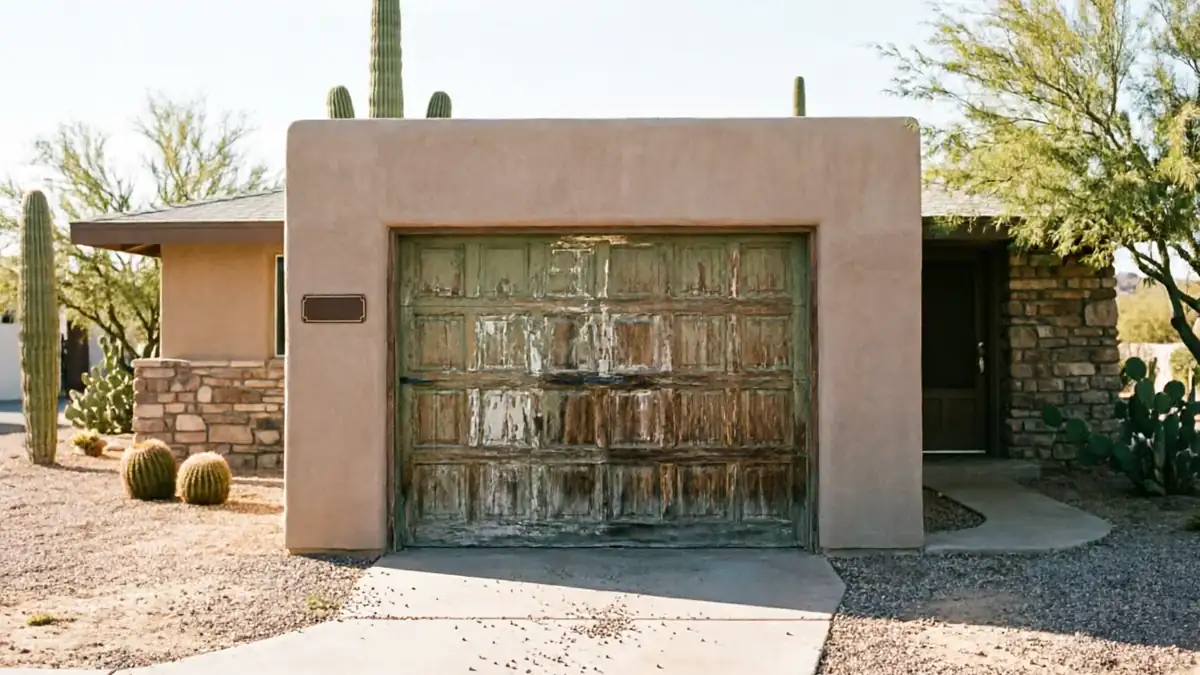
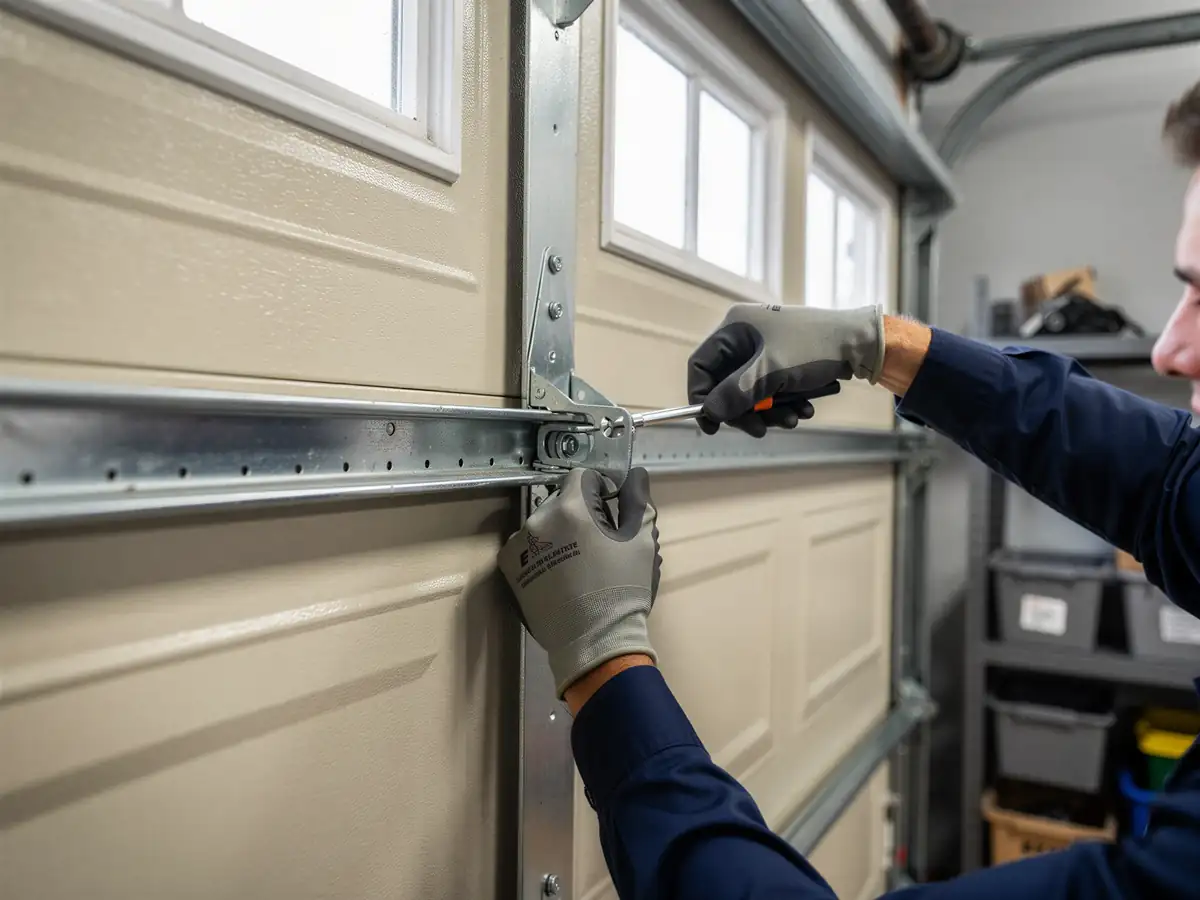
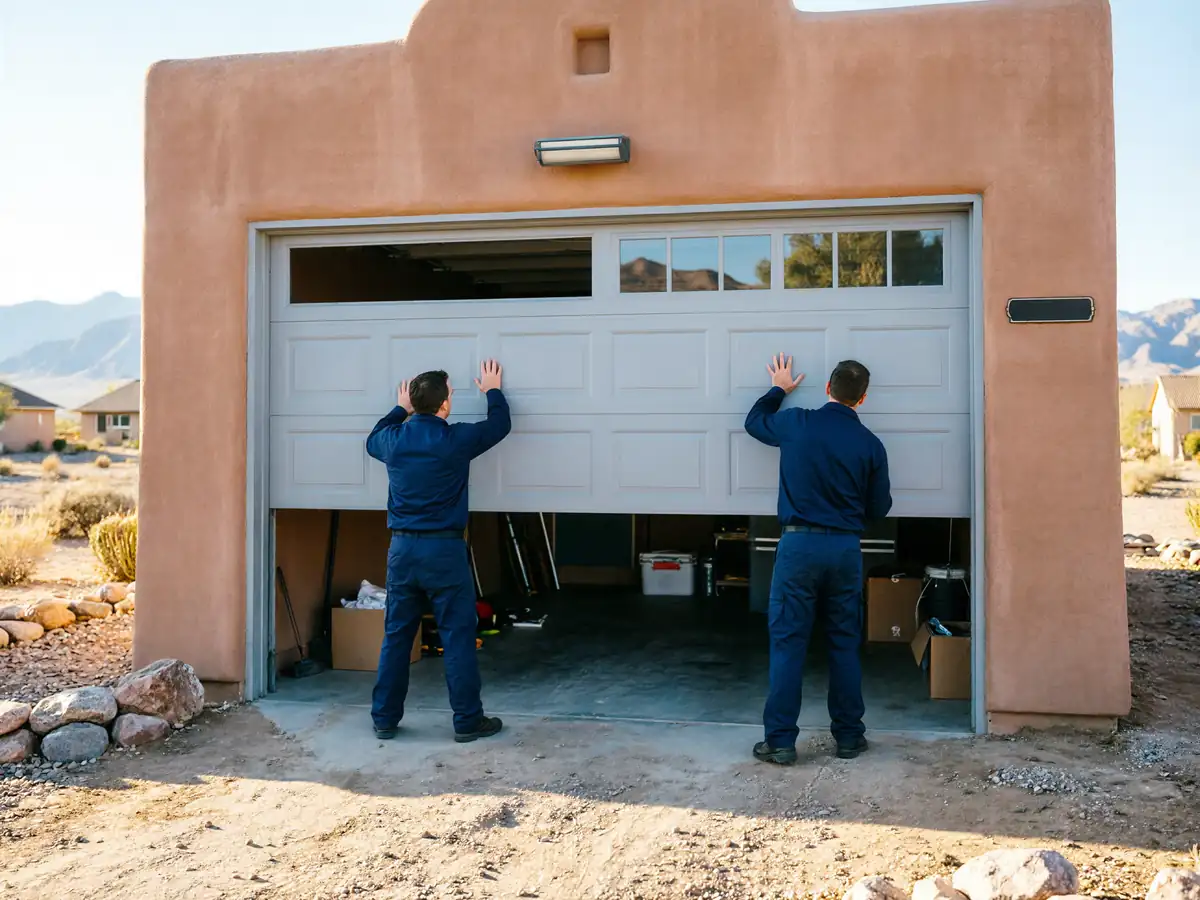
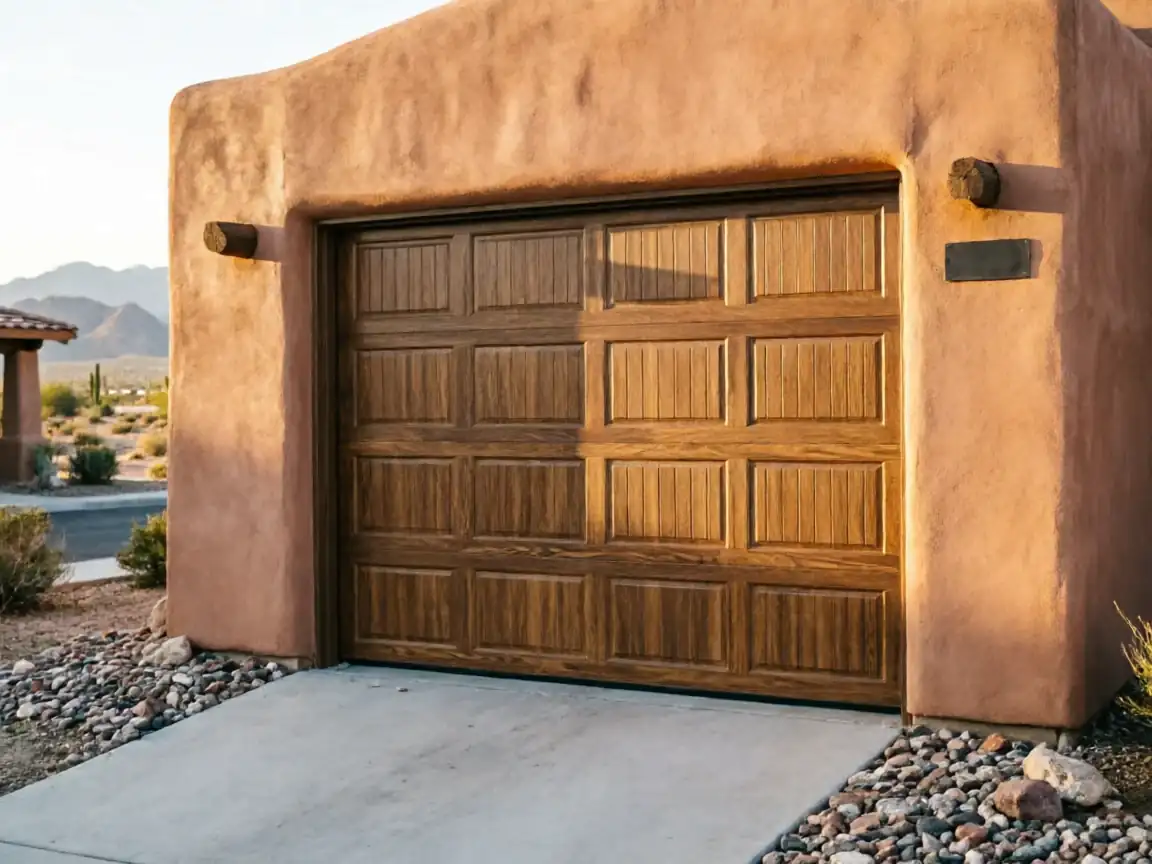
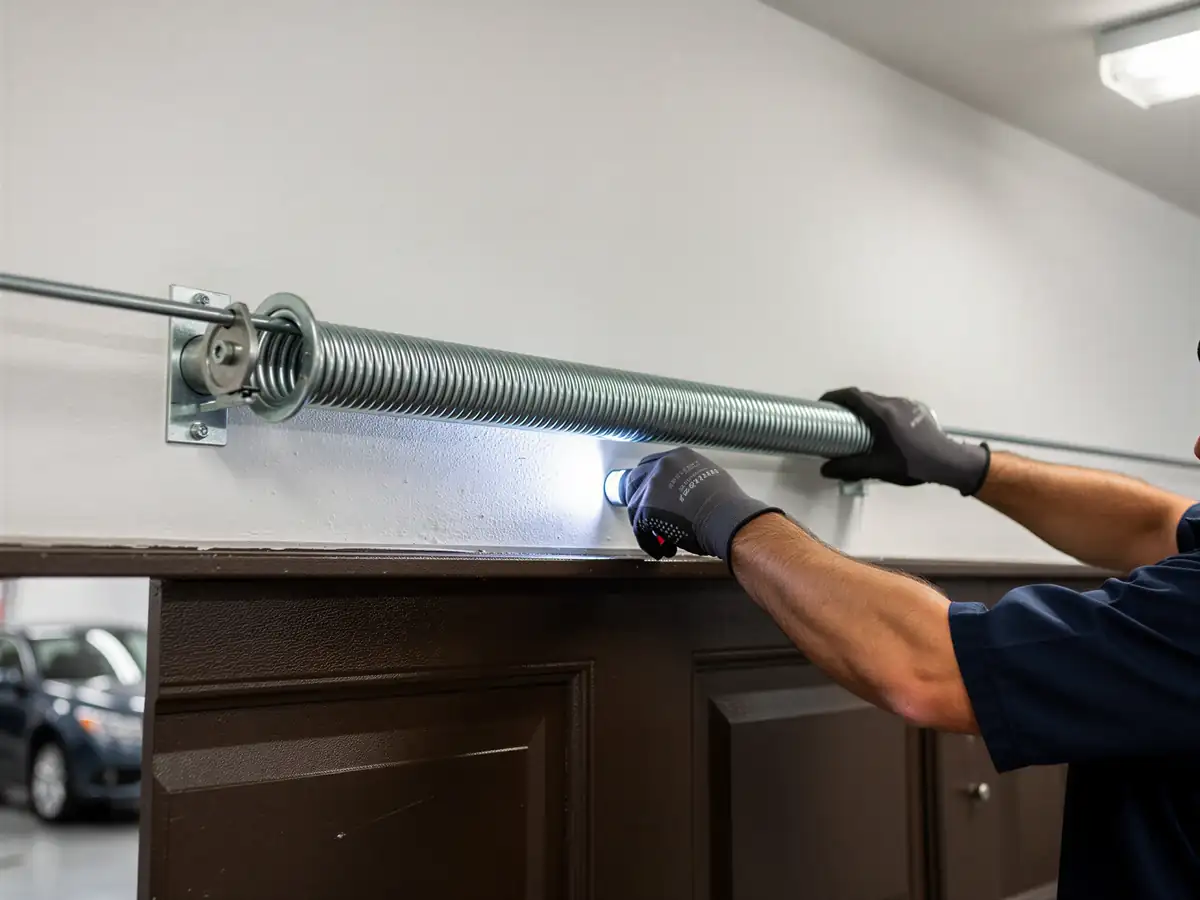
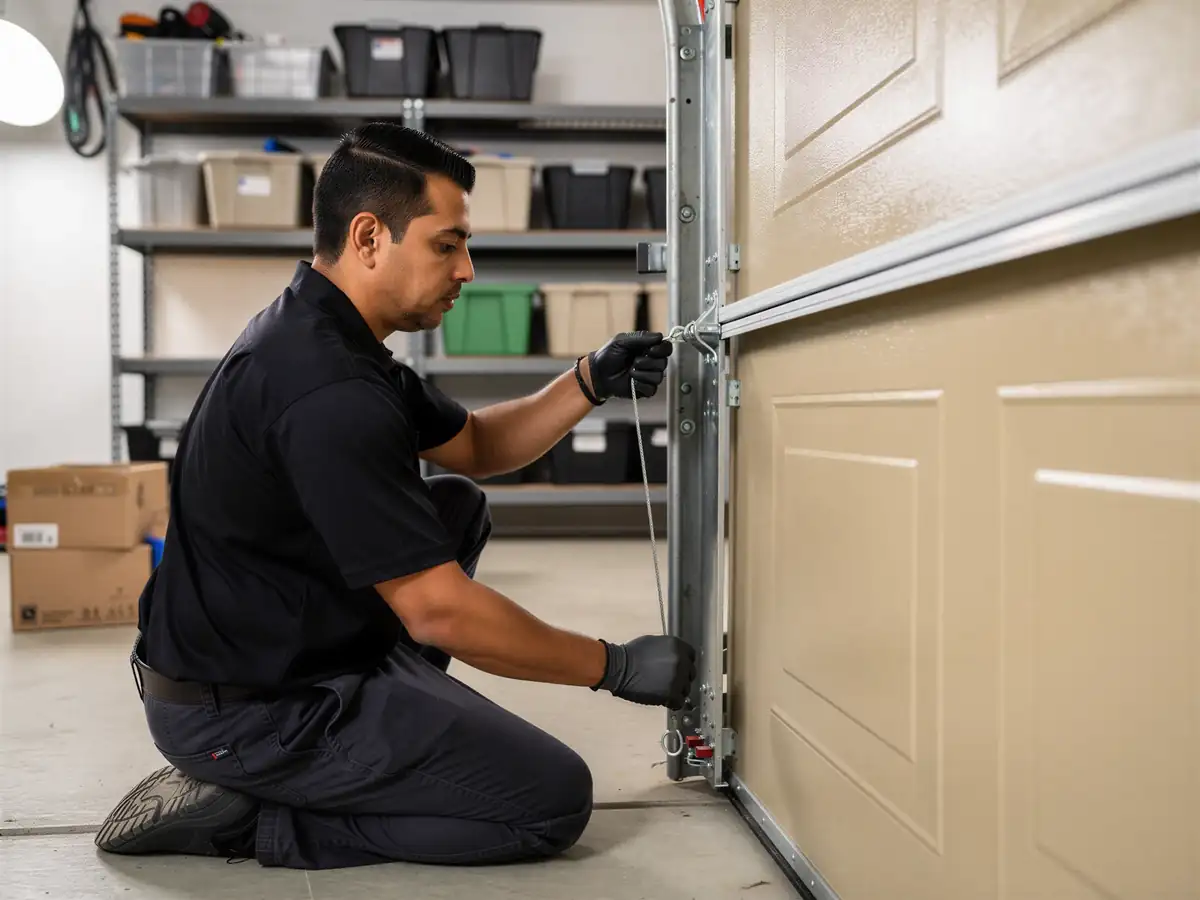
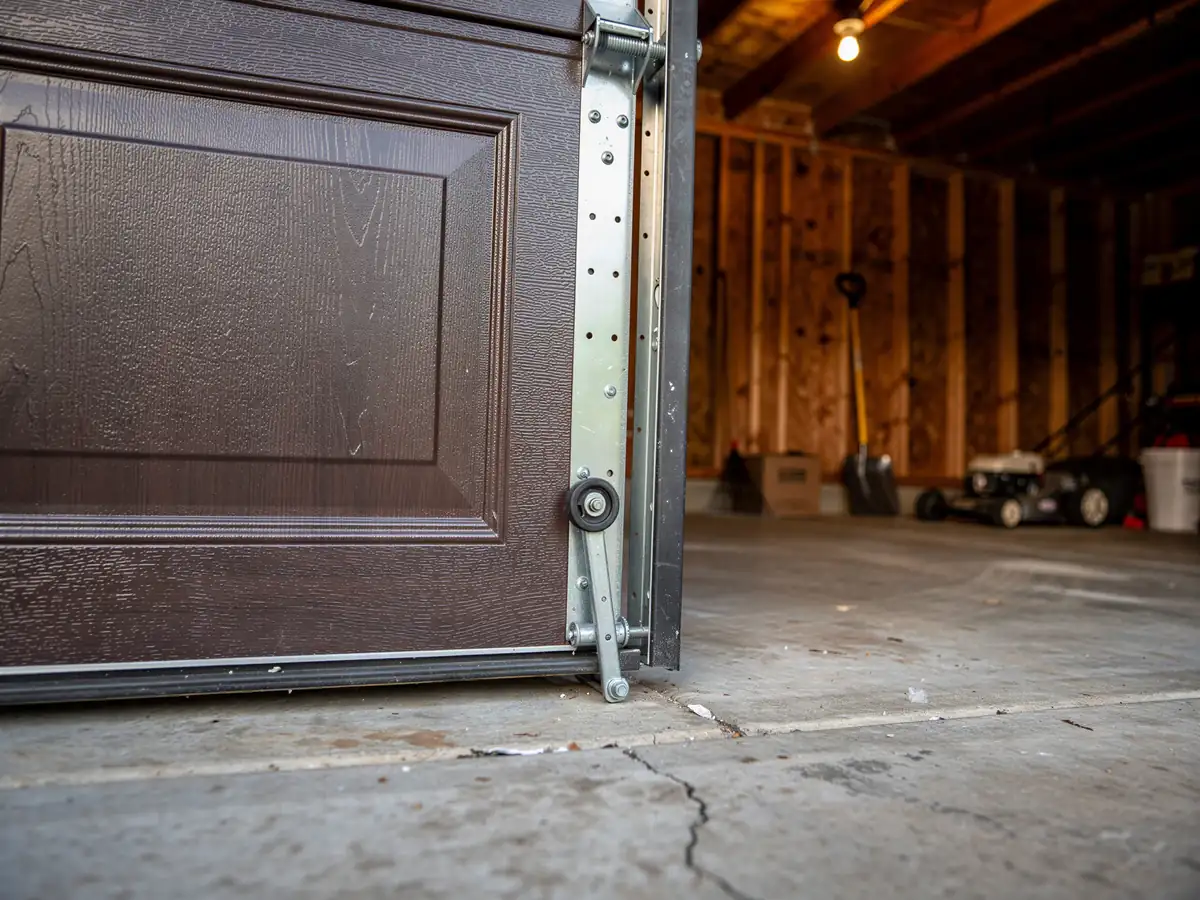
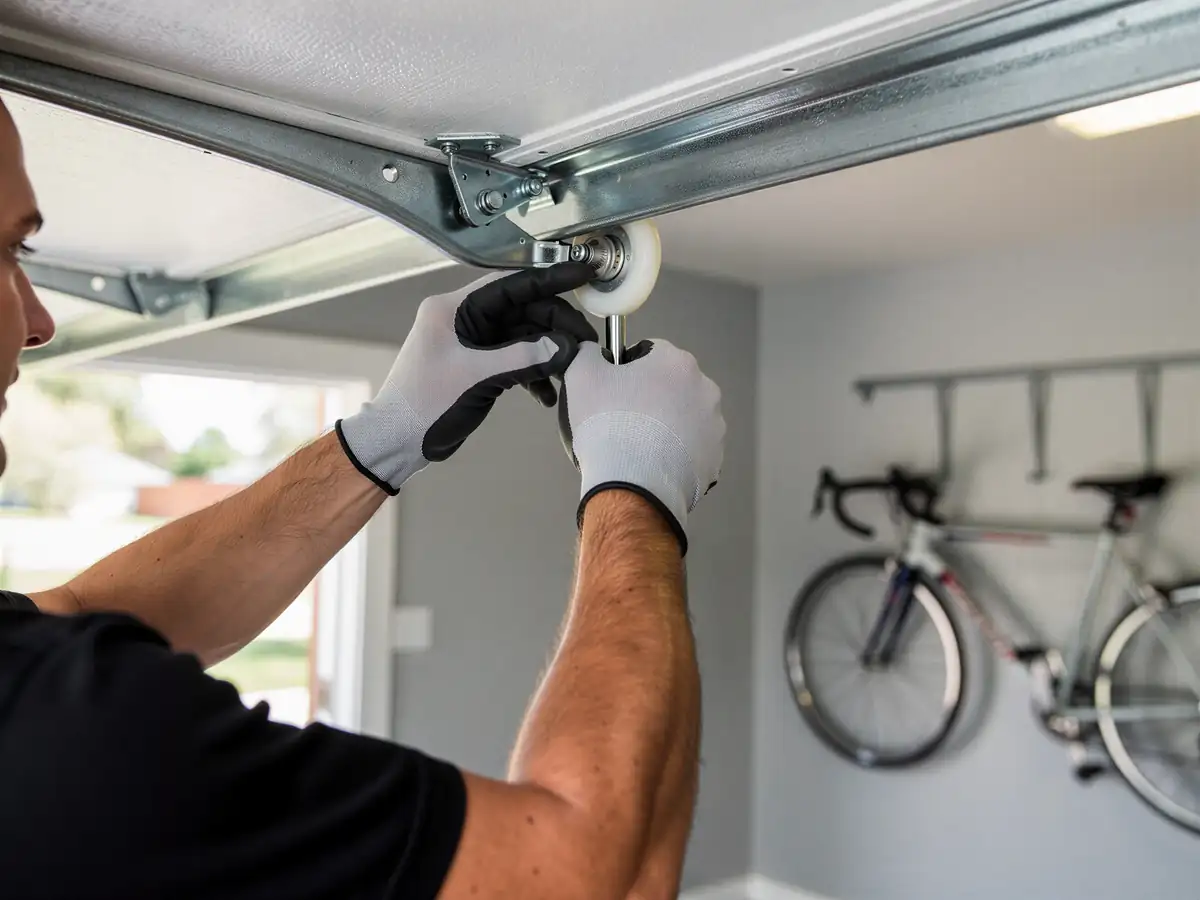
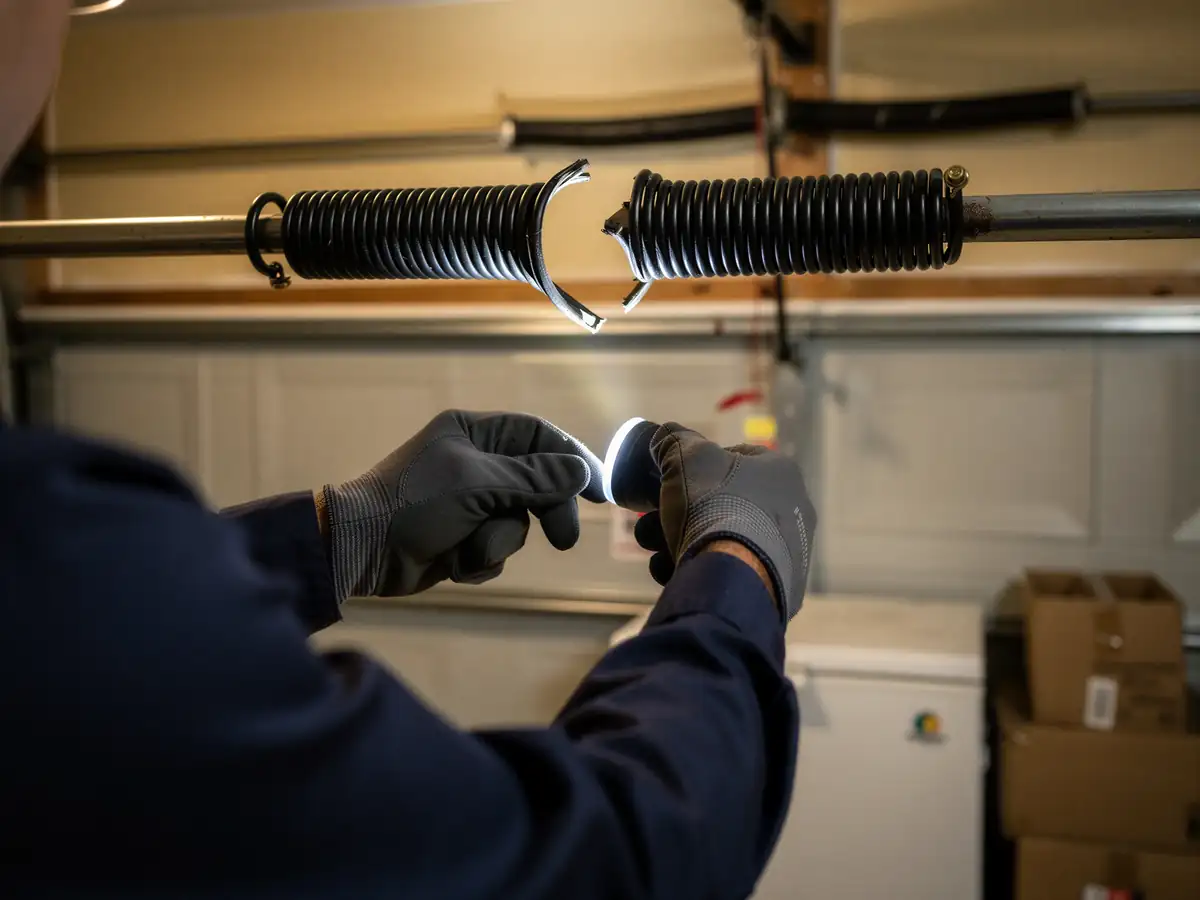
Most of the garage doors we open up in North Las Vegas went in somewhere between 1979 and 2006, with the median around 1994. That's a thirty-year-old torsion spring on a lot of houses, and springs are rated in cycles, not years - heat burns through that rating faster than cooler climates do. North Las Vegas sits in a severe heat band, and steel expands and contracts through a wider daily swing here than it does in milder places. That cycle stresses nylon rollers, dries out factory lubricant on tracks, and works lift cables loose at the drum over time. On a 1990s door, that means the rollers are probably original, the spring has likely never been swapped, and the opener - if it's the first one - is well past the point where parts are easy to find. None of that means the door is junk. A steel panel door from that era is usually a simple torsion system, well understood, and often cheaper to keep running than to replace. The question isn't the door's age by itself - it's which of those original parts have already failed and whether the frame and track are still square. We look at the track mounting and the bottom panel before anything else, because heat-driven wood rot behind the track voids the rest of the repair.
When to Call Someone
Call before the spring lets go, not after. A torsion spring on a door built in the 1980s-90s window has usually done more work than it was rated for, and a spring that's starting to sag or that makes a popping noise on the last few inches of travel is close to done. If the door is noticeably heavier to lift by hand than it used to be, that's the spring losing tension, not the opener getting weak. Cracked or peeling panel seams on a steel door from this era usually mean sun exposure got to the paint and the steel underneath is starting to go. Track that's pulled away from the wall, even a quarter inch, needs a look before it gets worse - in a severe heat climate, the wood framing behind that track dries and shrinks over the decades, and the lag screws stop holding. If the opener is the original unit from a house built in the 1990s, it's outliving its design life regardless of how it sounds today; we'd rather replace it on our schedule than yours, at 6 a.m. on a July morning when the garage is already past 100 degrees.
What You Pay
We don't have a published price list to hand you here, and giving you a number without seeing the door would be a guess dressed up as a quote. What we can tell you is what drives the number up or down on a house from this era: whether the spring is a standard size or a less common one some older builders used, whether the track needs full replacement or just realignment, and whether the opener is salvageable or needs swapping entirely. Median household income across our service area runs around $61,177, and most of the repairs we do on 1980s-90s doors land well under a full door replacement - fixing the spring, cables, and rollers together usually costs less than most homeowners expect once they've priced a new door. Where it gets expensive is when heat-driven rot has reached the framing behind the track; at that point you're paying for carpentry, not just garage door parts, and that's worth knowing before we show up.
The Situation
Across the areas we work - Sunrise Manor, Winchester, Whitney, Paradise, Spring Valley, Summerlin South - the housing stock tells a consistent story: doors and openers installed when the house was built, rarely touched since, now hitting the end of their service life around the same time as each other. With roughly 70,779 owner-occupied houses across a service area of 271,542 households, we see the same handful of original setups over and over. The honest limitation here: if your door's steel has corroded through at the bottom panel from years of sprinkler overspray or if the frame itself has shifted, no spring or roller swap fixes that - at that point you're looking at a new door, not a repair. We'll tell you straight which side of that line your door is on before we start any work.
How it works
From “it’s stuck” to “it’s fixed”
01
Tell us what’s wrong
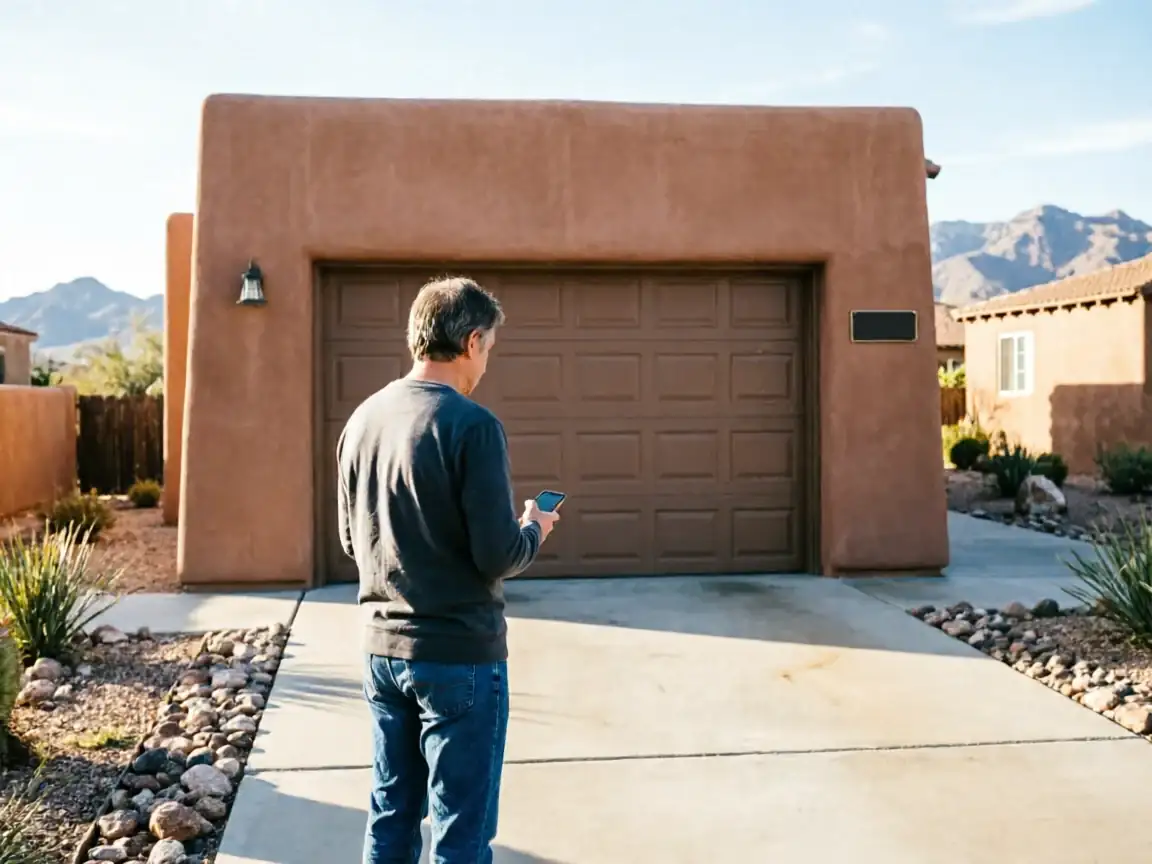
Describe the symptom - won’t open, loud bang, opener runs but the door won’t move.
02
On-site diagnosis
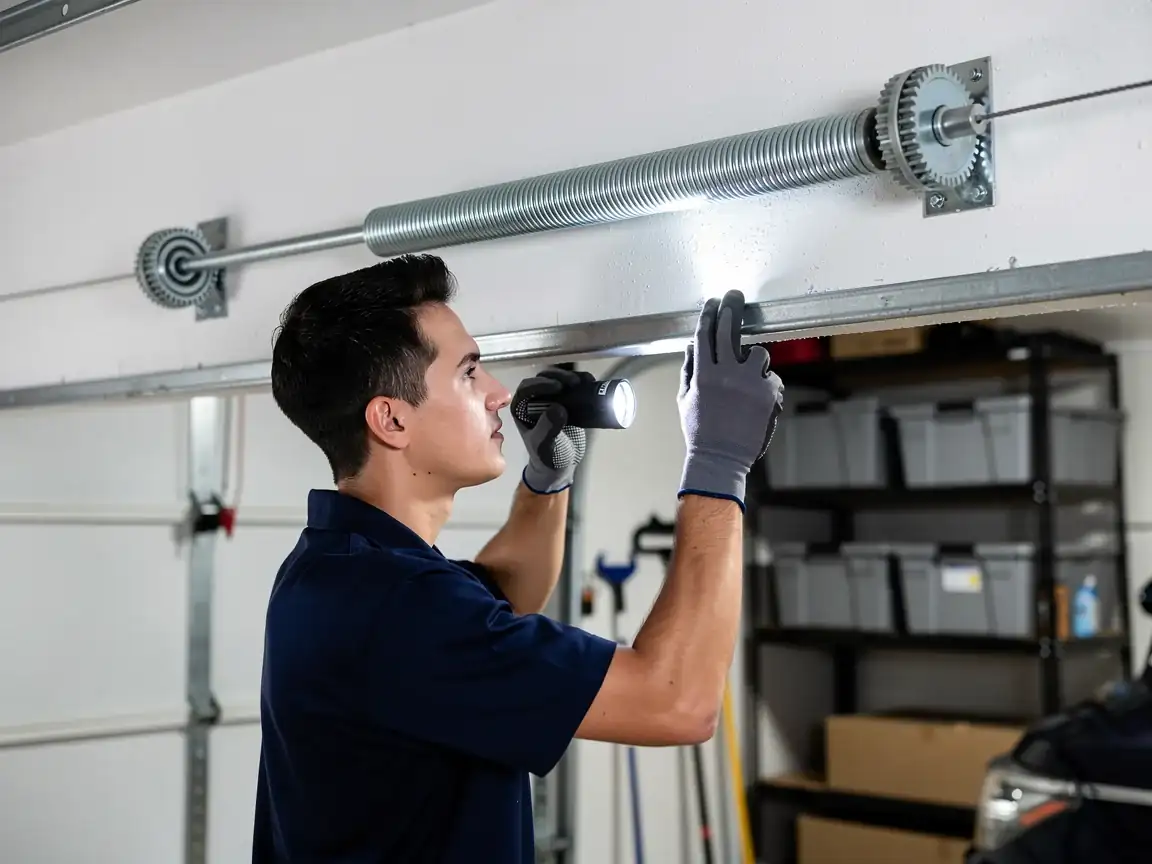
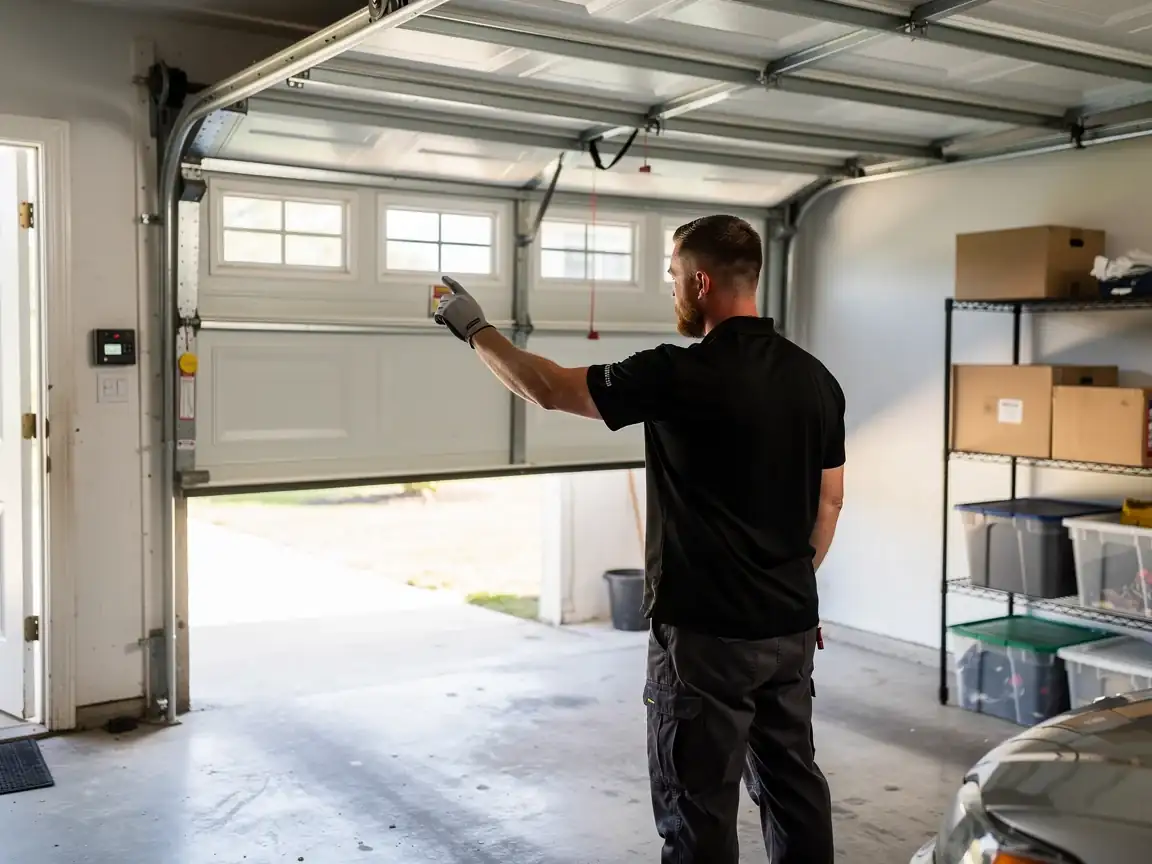
A technician tests the door under power and by hand and finds what actually failed.
03
Clear, up-front plan
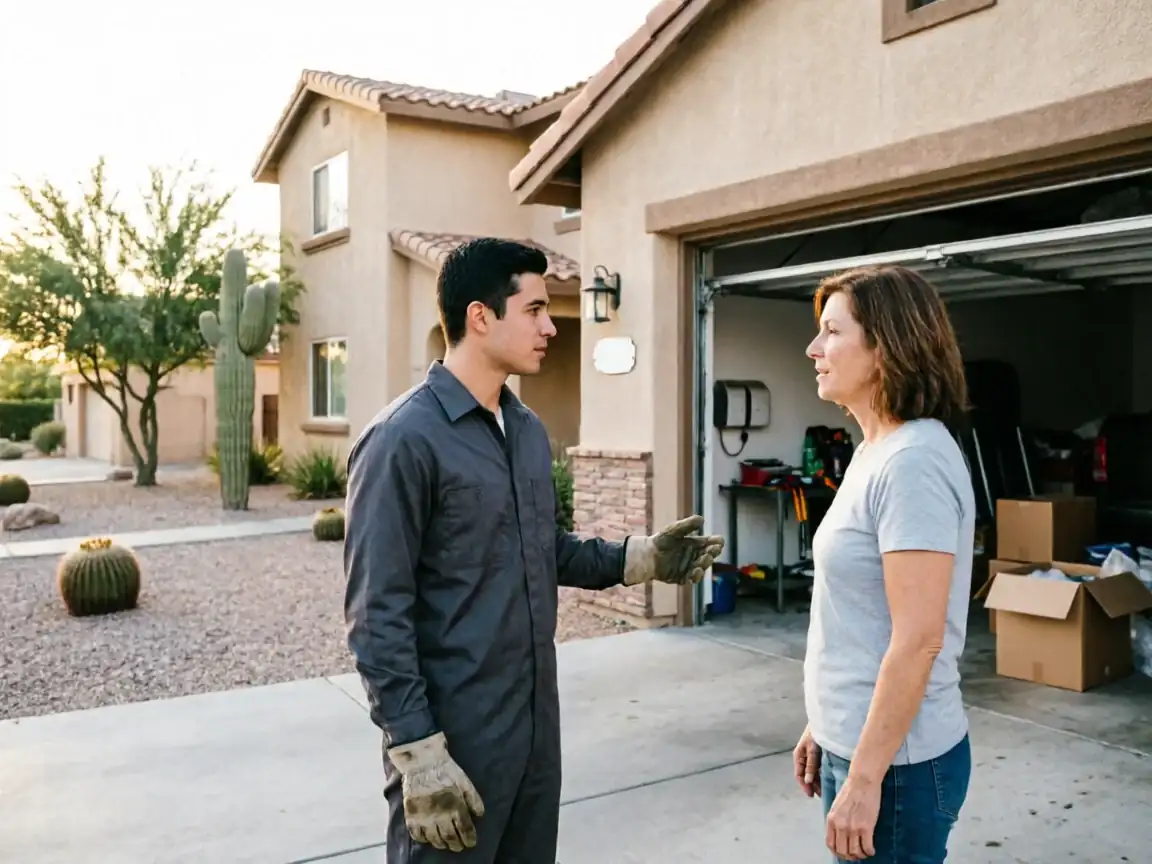
You get the fix that’s needed and what drives the cost - before any work starts.
04
Repaired & tested
The repair is done, the door is set true and tested, and the work area left clean.
Not sure which repair your door needs in North Las Vegas, NV? Describe what it’s doing - every job starts with a diagnosis.
Age alone doesn't decide it. A door built in the 1980s or 90s with a sound steel panel and a square frame is usually a good repair candidate - springs, rollers, and cables are standard parts. It's rot in the framing or corrosion through the panel that ends the conversation, not the decade it was installed.
Why did my spring break without warning?
Torsion springs fail on a cycle count, not a calendar, and North Las Vegas's severe heat band accelerates metal fatigue compared to milder climates. A spring on an original-build 1990s door has usually logged more cycles than its rating accounts for, so the last one looks sudden even though the wear was gradual.
Should I replace the opener too?
If the opener is original to a house built in this era's window, it's past typical design life regardless of how it currently sounds. We'd rather tell you that now and let you plan the swap than have it fail on you during a heat spike when the garage is already over 100 degrees.
Ready to get your garage door sorted?
Tell us what it’s doing and where you are in North Las Vegas - we’ll take it from there.