Stocked Parts
A door off track almost never means you need a whole new door
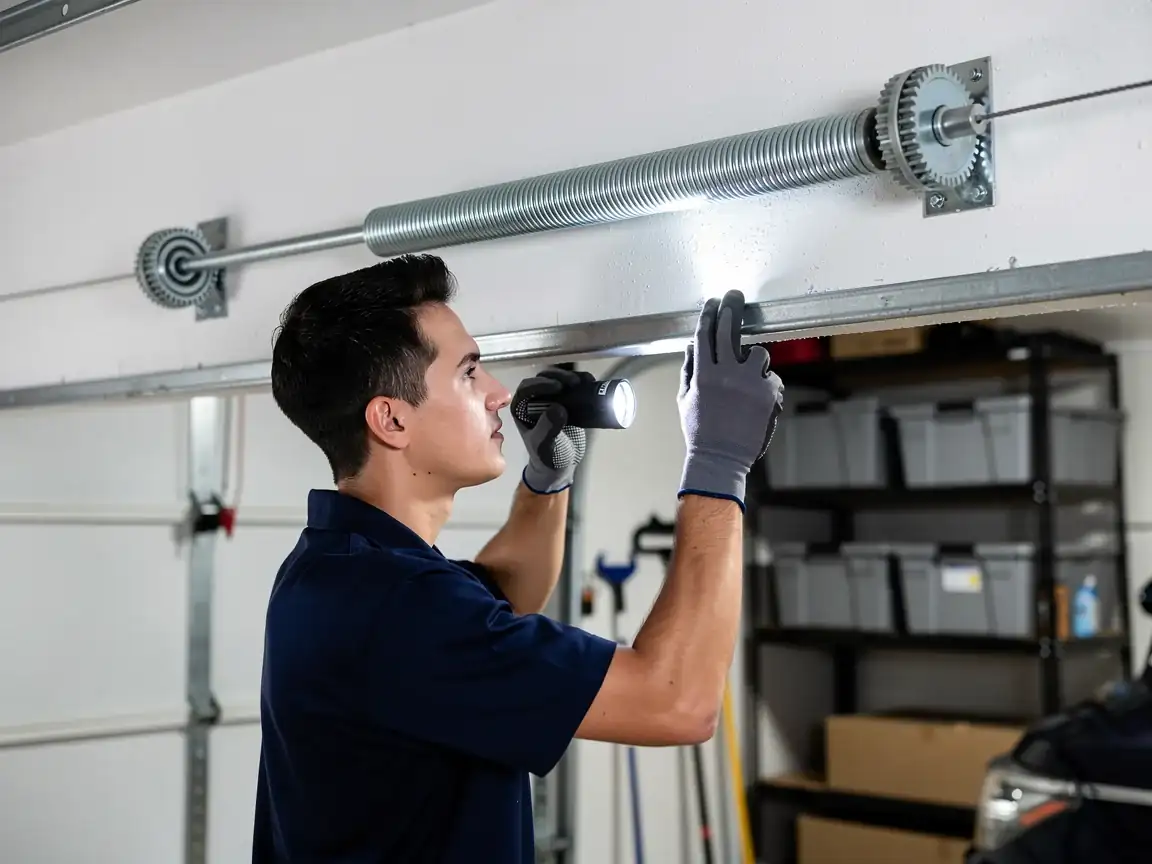
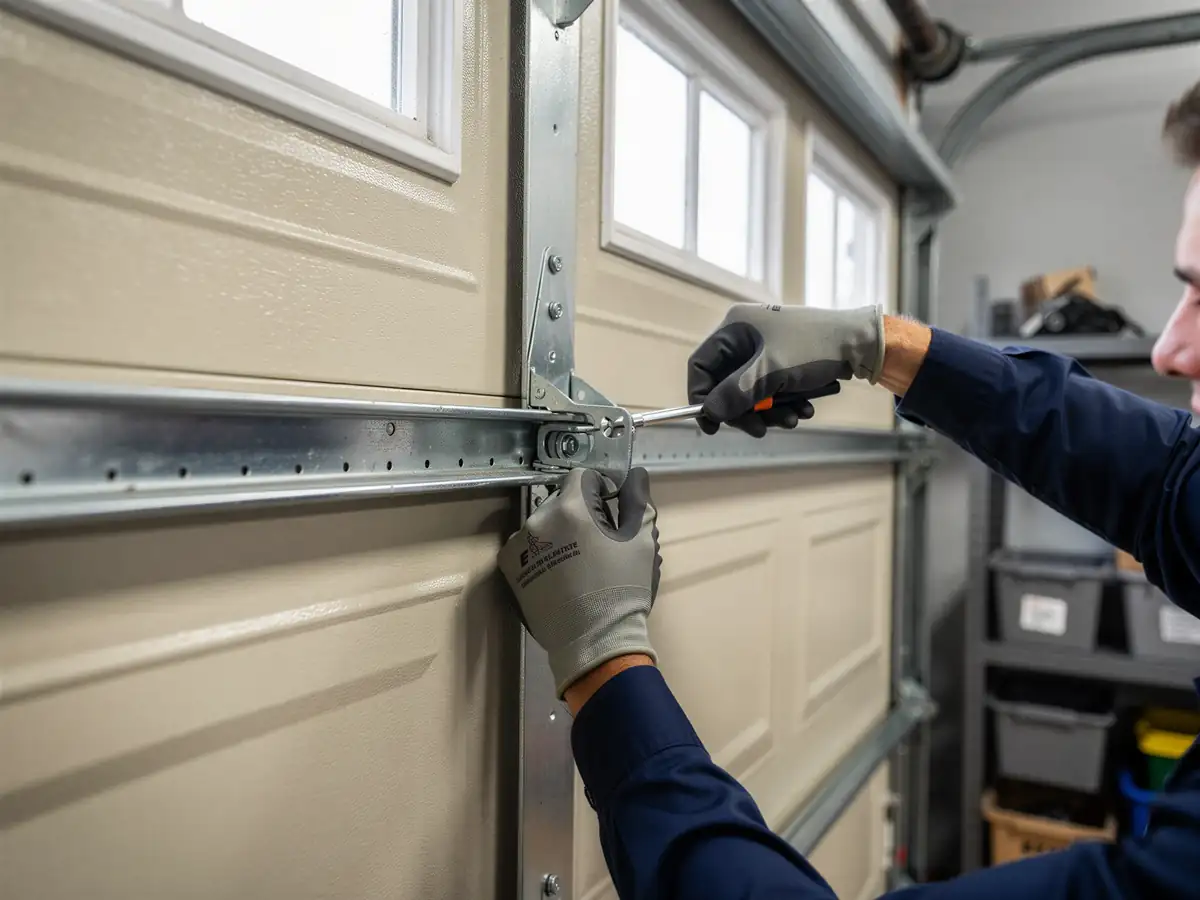
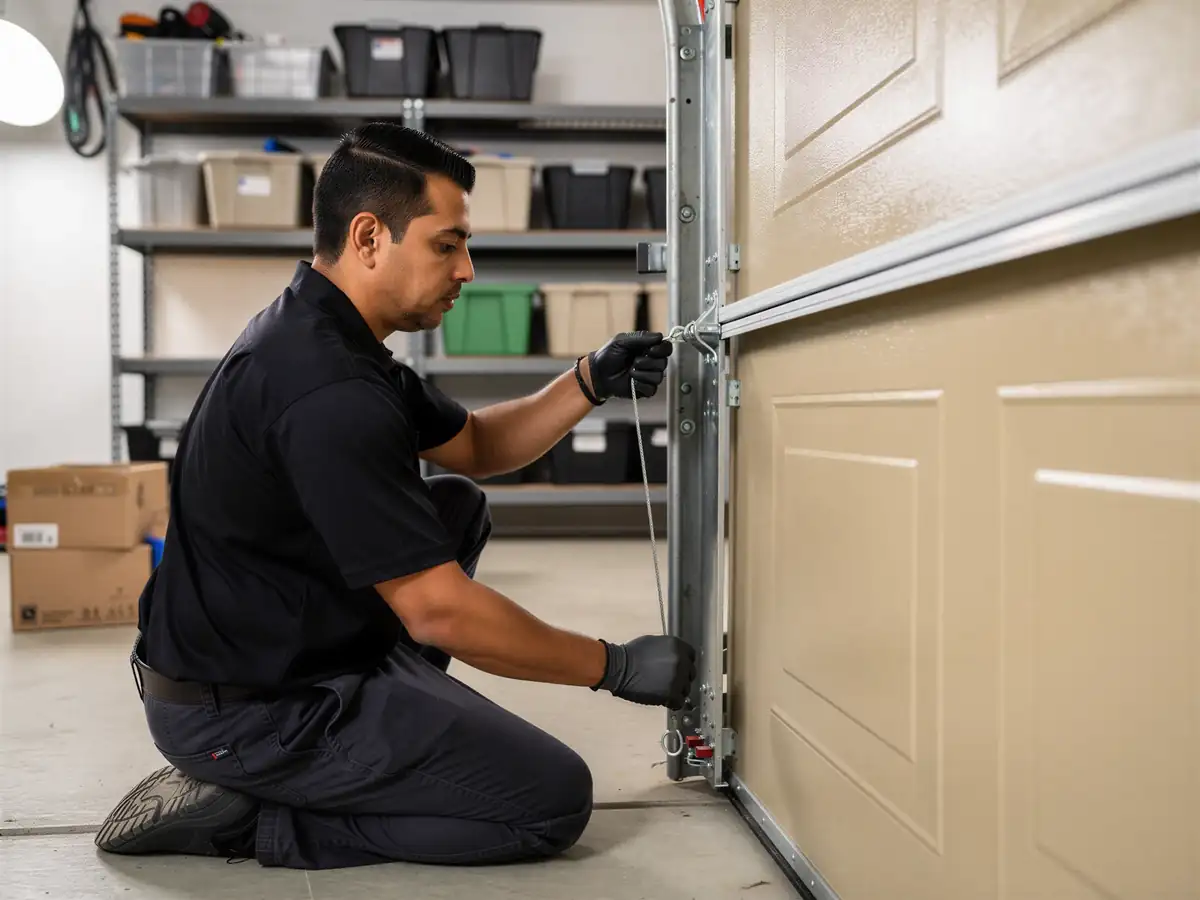
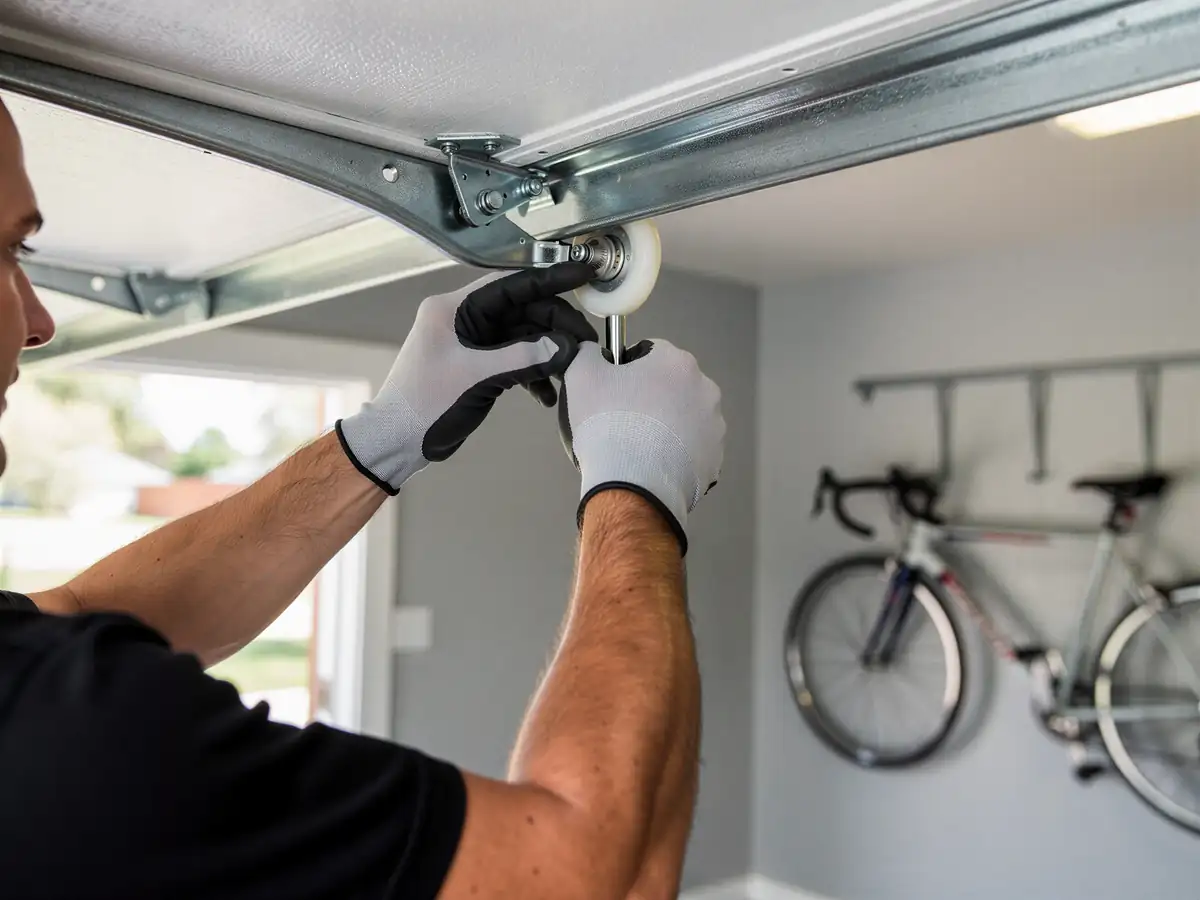
Most calls come down to bent track sections, worn rollers, or a dislodged bottom bracket, and we carry replacements for all three on the truck. Nylon and steel rollers are the two we swap most, since houses built across the 1979-2006 window that makes up most of North Las Vegas's housing stock were fitted with hardware that just wears out after decades of heat cycling.
Track itself comes in standard widths
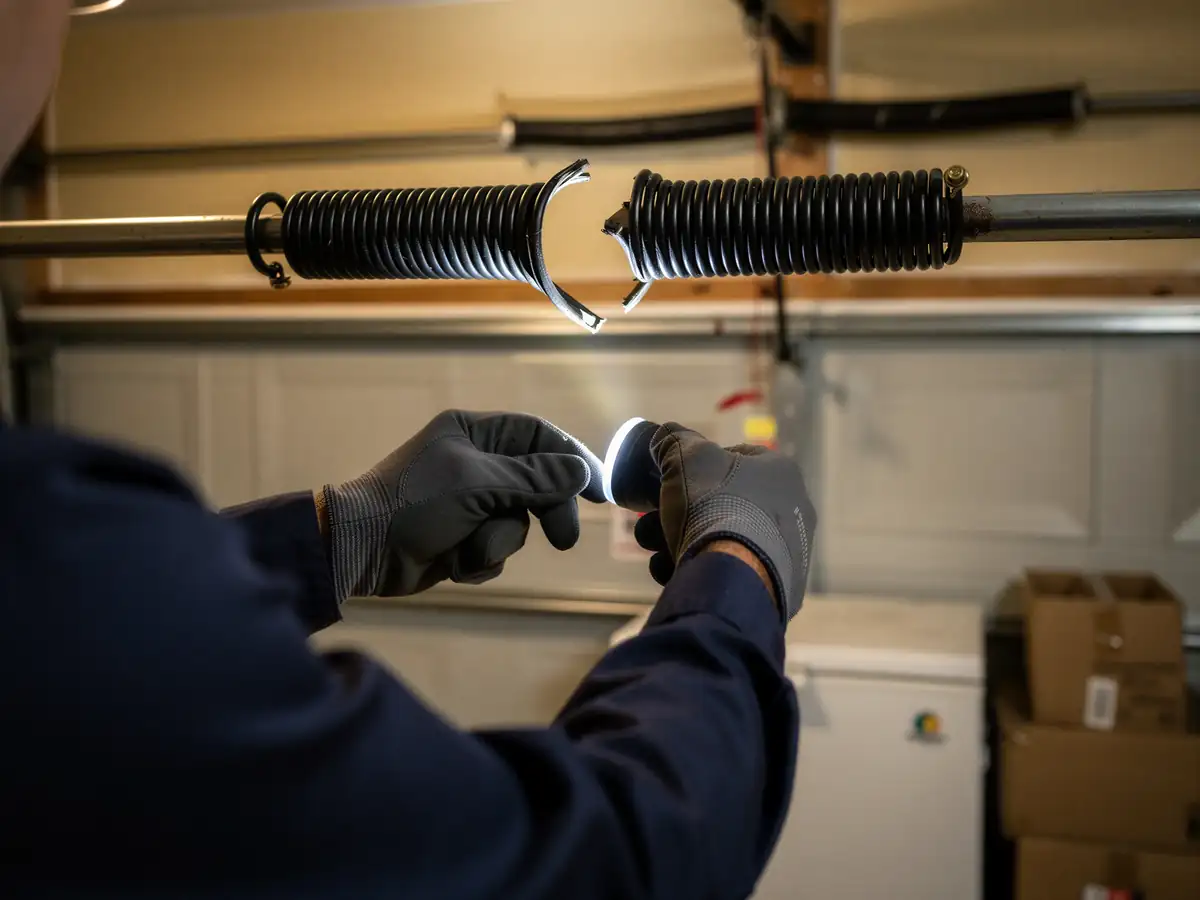
And we keep straight sections and radius pieces on hand so a bent run can usually be replaced the same visit rather than special-ordered. Bottom brackets and the cables that run through them are the other common failure point - when a cable frays or a bracket cracks, the door can walk sideways out of the track under its own weight.
What we don't carry for every job is a matching replacement panel if the door itself is dented or warped from the derailment
Panels are often model-specific, and if yours is older or from a builder-grade run common to the 1980s-90s stock in this area, that part can mean a short wait while we source it. We'll tell you up front if that's the case instead of guessing.
What You Pay
We don't post a flat price for this because 'door off track' covers a wide range of actual damage - a roller swap and a track re-set is a different job than replacing a bent section plus a cracked bottom bracket plus the cable it tore loose. What drives the bill is parts needed and whether the opener and safety sensors also need re-aligning after the track moves.
What we can tell you is how we price it: we diagnose on site, tell you what's actually bent or worn before we touch anything, and the number you hear is for the parts and labor your door needs, not a generic package. With a service area median household income around $61,177, we know most of these calls are a planned repair, not a want - we'd rather give you an honest number once we've seen the door than a quote over the phone that changes once we're in your driveway.
The one thing we won't do is push a full door replacement when a track and roller job will hold for years. If replacement really is the better call - usually when the panels themselves are bent - we'll say so, but that's the exception, not the default.
The Symptom
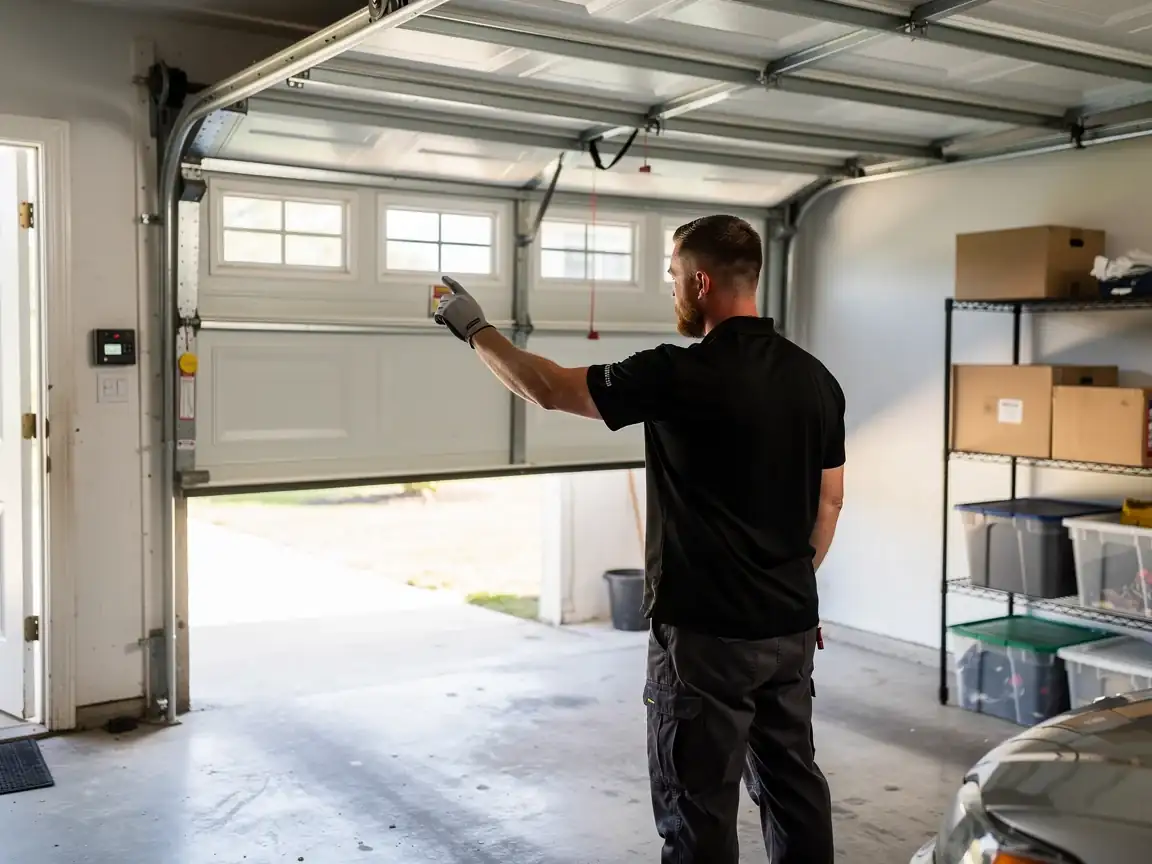
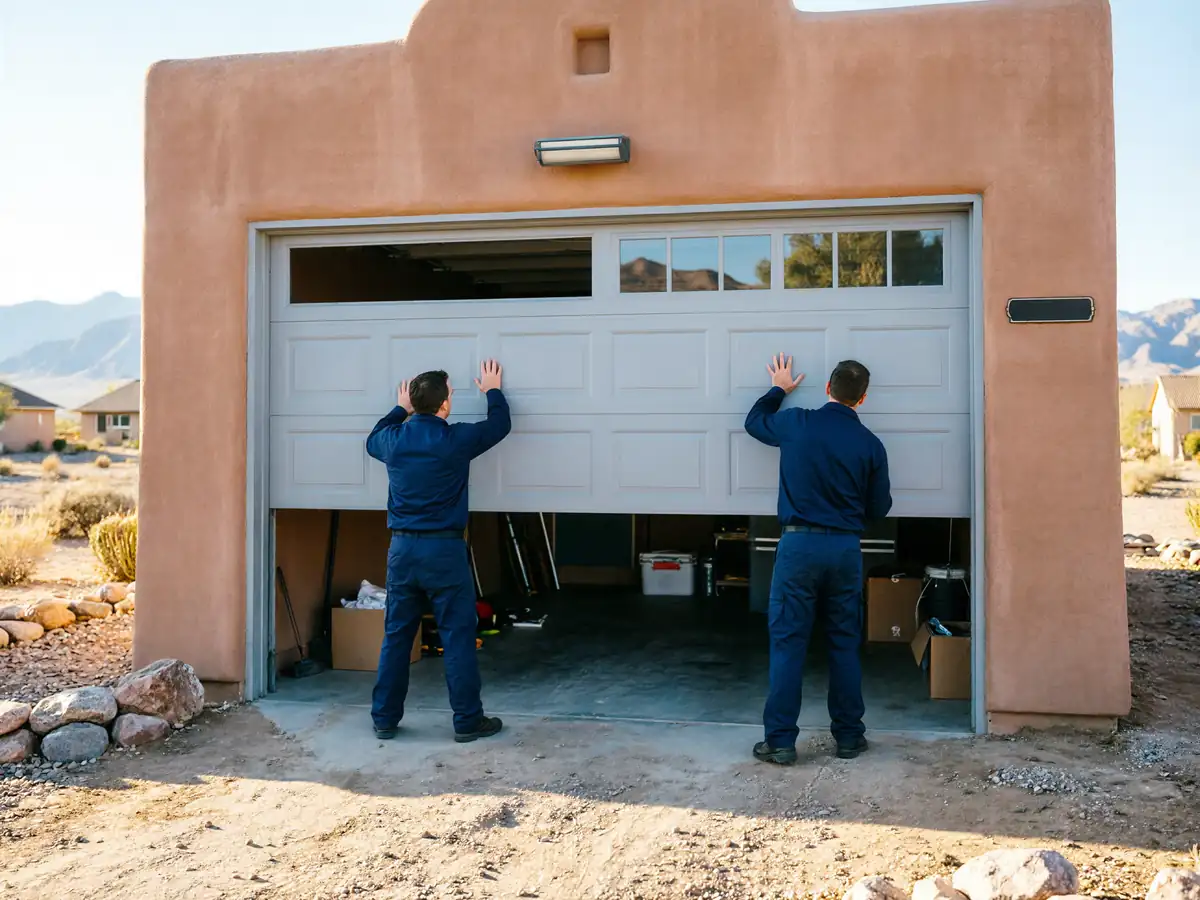
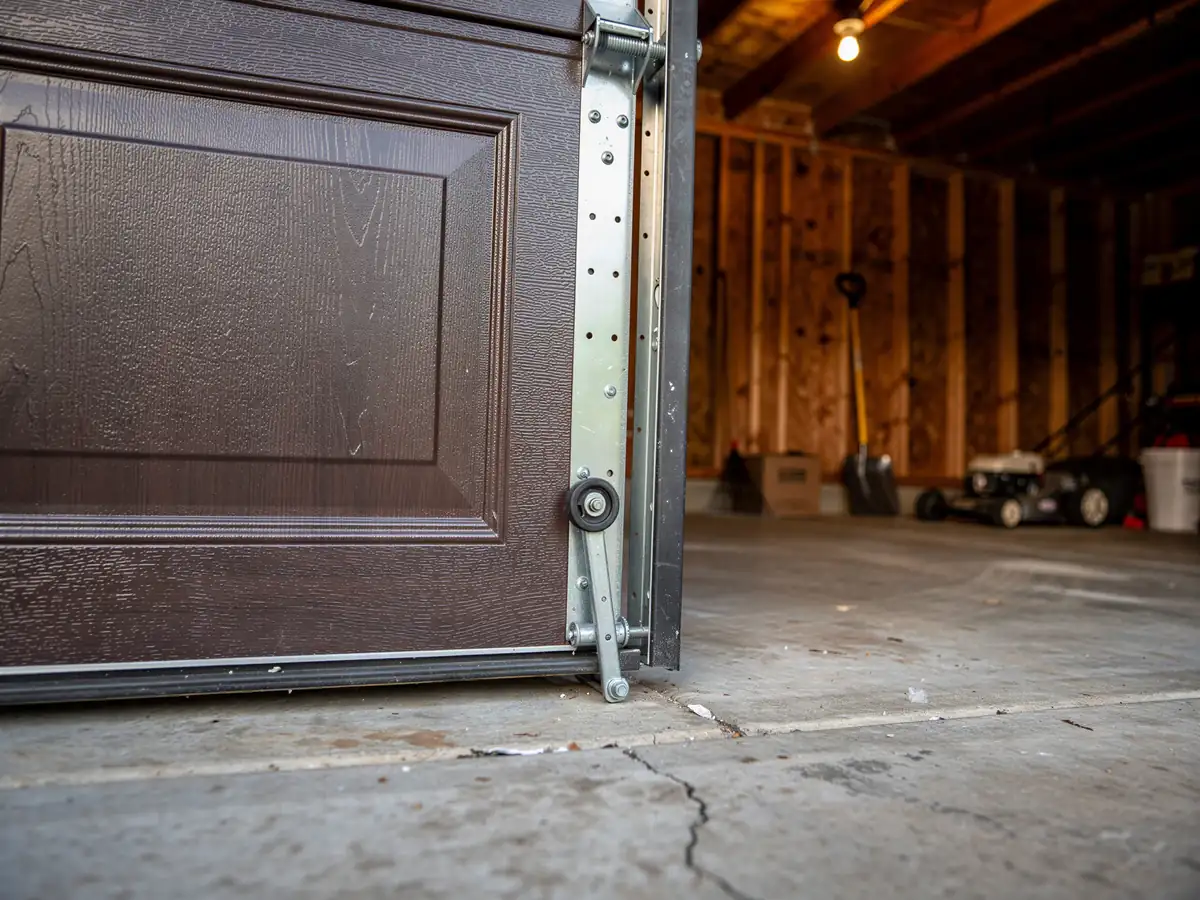
You'll usually notice it before the door fully derails. The door looks crooked in the opening, one side sits lower than the other, or it jerks and binds partway through a cycle instead of gliding smoothly. Sometimes there's a visible gap between the roller and the track on one side, or you can see the track itself has pulled away from the wall bracket.
If the door has already come off the track, stop using the opener. Running the motor against a door that's not seated in its track can bend the track further, strip the opener's drive gear, or snap a cable under load - turning a parts-and-labor repair into a bigger one. A door that's visibly tilted or hanging on one cable is also a safety risk; a panel that heavy coming free is not something to be standing under.
Some owners also hear it before they see it - a grinding or popping sound right as the door starts to move is often the roller catching on a section of track that's already started to separate from its bracket.
What Causes It Around Here
North Las Vegas sits in a severe heat band
And that matters more for this failure than most owners expect. Steel track and the brackets holding it to the frame expand and contract through repeated 100-plus degree days, and over enough summers the fasteners holding track to the jamb work loose. Combine that with housing built mostly between 1979 and 2006, median year 1994, across six distinct pockets of similar-era stock, and you've got a lot of doors running original or first-generation replacement hardware that was never built for this many heat cycles.
Across the roughly 70,779 owner-occupied houses in the service area
That 1980s-90s hardware generation is the common thread, whether the house sits closer to Sunrise Manor eight miles out or Summerlin South eighteen miles out. The track doesn't have to be damaged to separate - it just has to loosen enough that a roller catches wrong on a hot afternoon when the metal's at its most expanded.
- 70,779 owner-occupied
Daily heavy use plays a role too
But in this climate the heat-cycling fatigue on track brackets is doing a lot of the work before a single roller ever fails.