Stocked Parts
Most of the service area, from Sunrise Manor out to Spring Valley, was built between 1979 and 2006
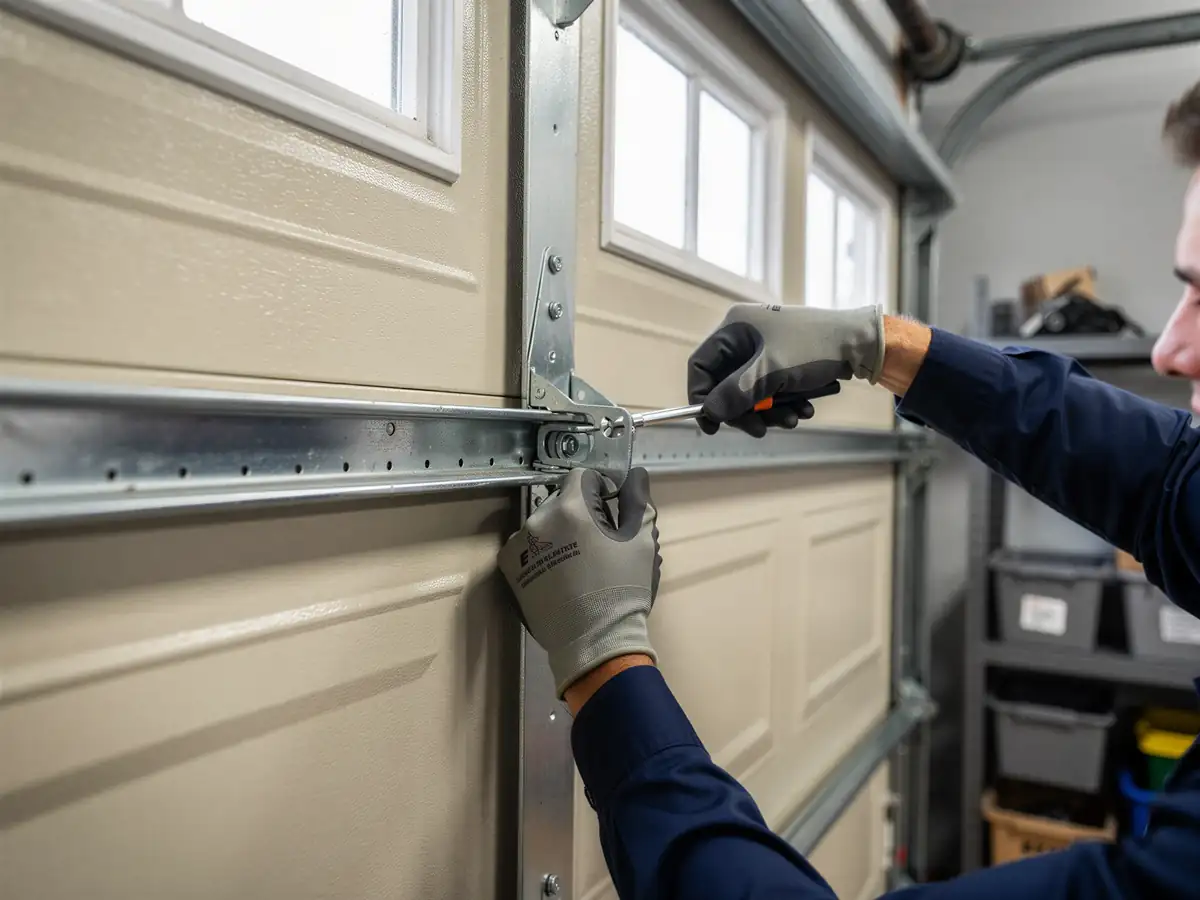
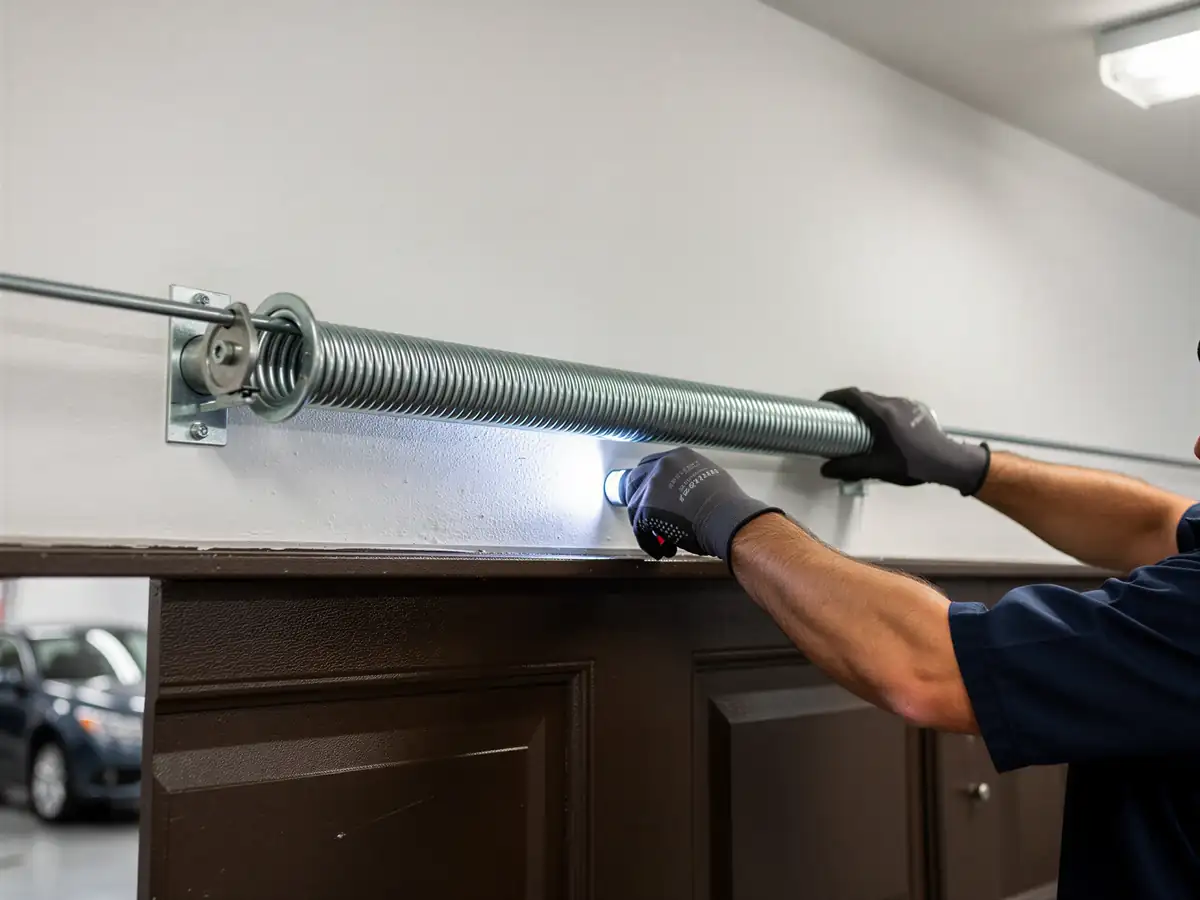
With the bulk of it going up in the 1980s and 90s. That means the torsion springs we pull off these doors fall into a narrow band of wire sizes and winding lengths, and we keep that band stocked on the truck rather than special-ordering it.
What we don't carry are springs for doors older than that stock
Or oddball commercial-grade setups on panel doors that were never common out here. If your door falls outside the typical 1980s-2000s torsion setup, we'll tell you on the first visit instead of guessing on-site, and if it needs a part we don't carry, we'll say so rather than quote a fix we can't finish that day.
Double doors on these houses usually run two springs working together, and when one goes, the other is usually close behind it on wear
We check both every time, not just the one that snapped.
What You Pay
We don't post a flat number here because the job isn't flat - wire gauge, spring length, whether it's a single or double door, and whether the drums or cables need attention at the same time all move the price. What we can tell you is what drives the number up or down: a single spring swap on a standard torsion setup is the simplest version of this job, and it gets more involved fast once a cable's frayed or a drum's cracked from the extra strain of a dead spring.
Income and household size vary across the towns we cover - the service area runs a median household income around $61,177 across roughly 271,542 households - and we quote the job in front of you before any work starts, not after. If a repair is going to cost close to what a comparable new spring setup runs, we'll say that too, instead of patching something that's going to fail again in a year.
The Symptom
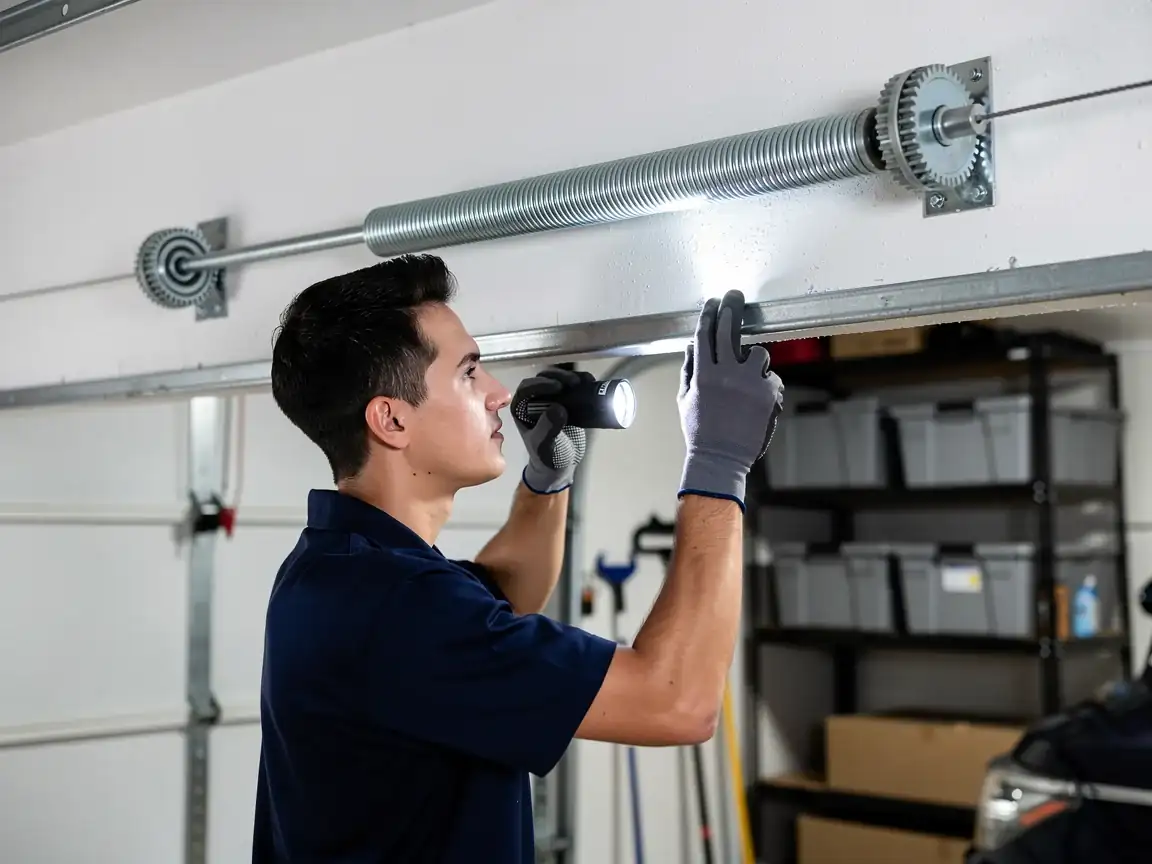
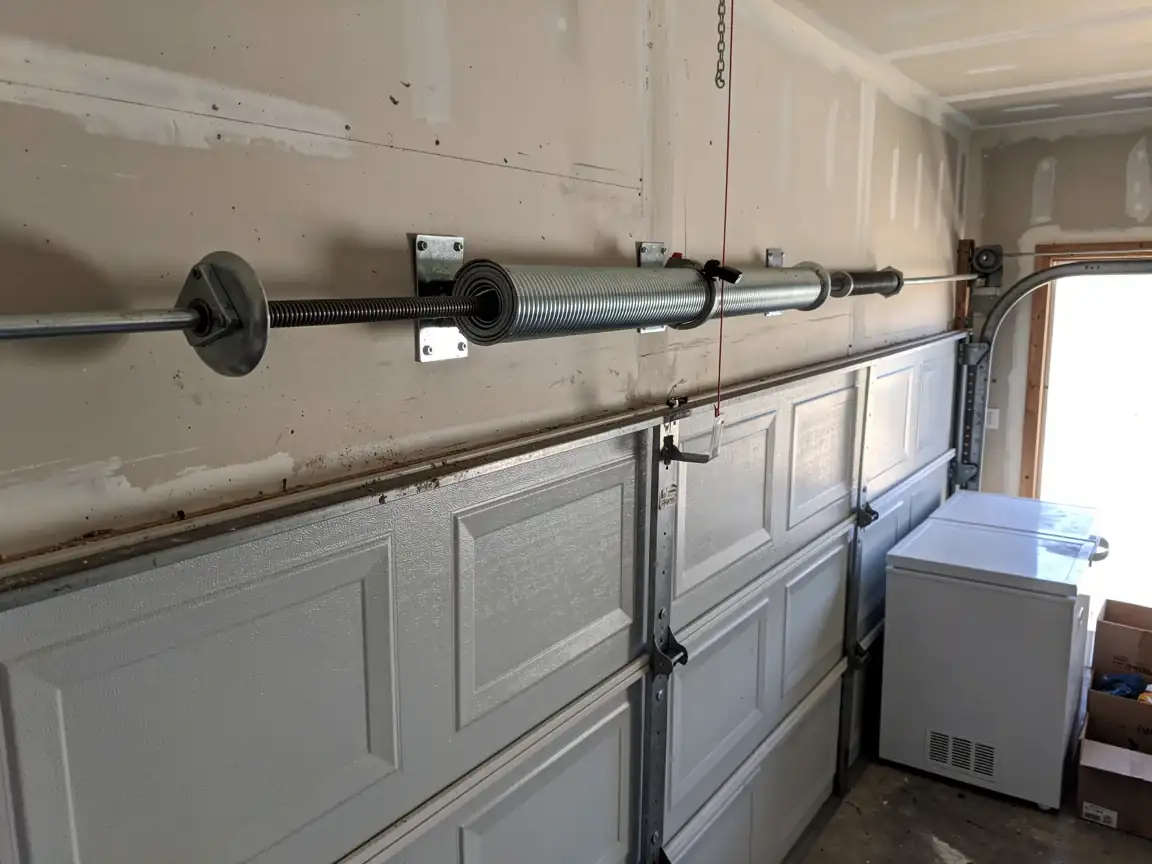
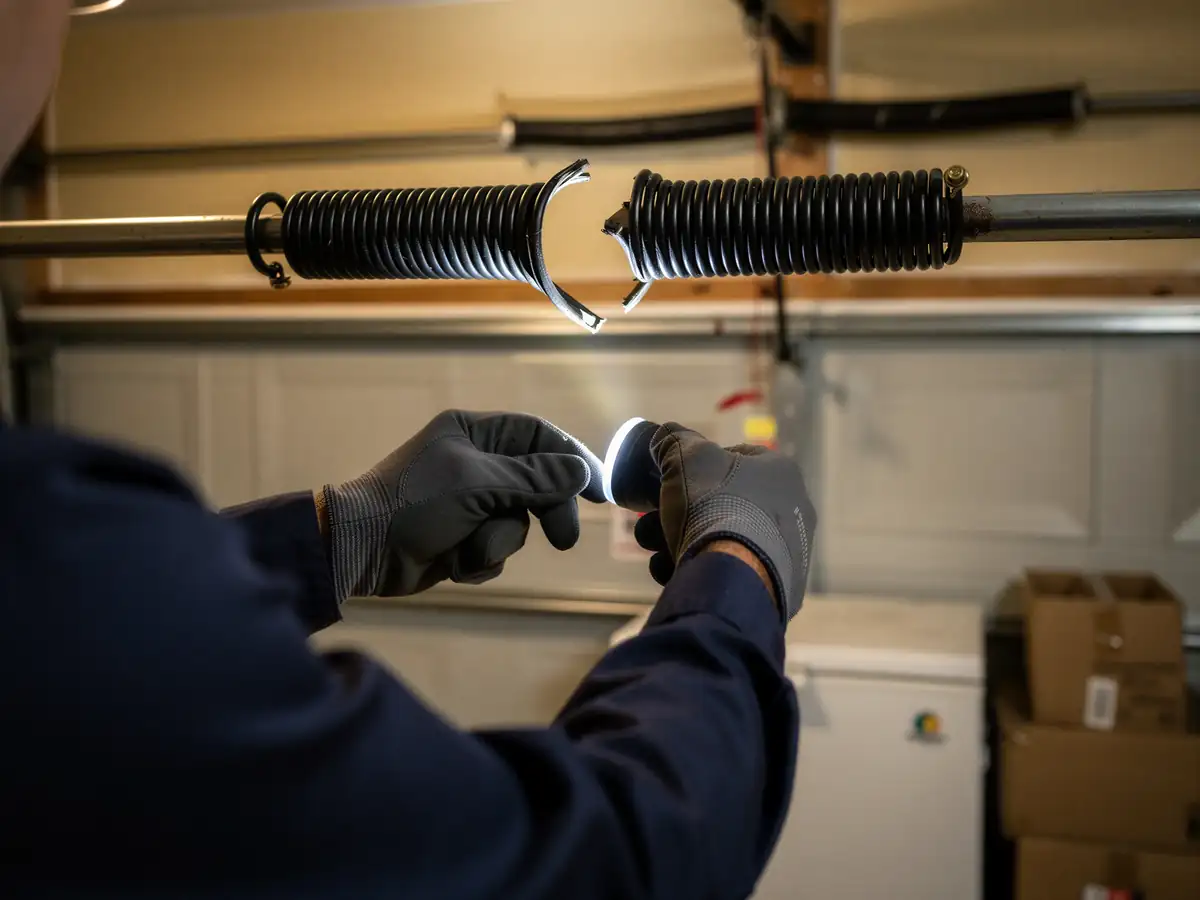
The door won't open, or it opens a few inches and stops. Sometimes it's a loud bang from the garage first - that's the spring letting go, not the opener failing. You might see the spring itself split apart above the door, a visible gap in the coil. The opener will strain and click if you try to run it anyway, which burns out the motor faster, so don't keep hitting the button.
A slower version of the same symptom: the door gets heavier to lift by hand over a few weeks, or it closes crooked, dropping faster on one side. That's a spring losing tension before it fully breaks, and it's worth a call before it snaps rather than after.
What Causes It Around Here
This area sits in a severe heat band, and that matters more for springs than people expect
Torsion springs are rated for a number of open-close cycles, but heat cycling - hot days, cooler nights, repeated expansion and contraction of the steel - shortens that life faster than cold climates do. A spring rated for a certain number of cycles in a mild climate doesn't always get there here.
Pair that with the age of the housing stock
A door and spring installed when a house was built in the 1980s or 90s is now old enough that it's well past any reasonable spring life, heat or no heat. We see a lot of original hardware still on these doors, which means the spring failing isn't a sign anything was done wrong - it's a part that's been doing its job for decades in tough heat and is simply done.