Doing It Yourself
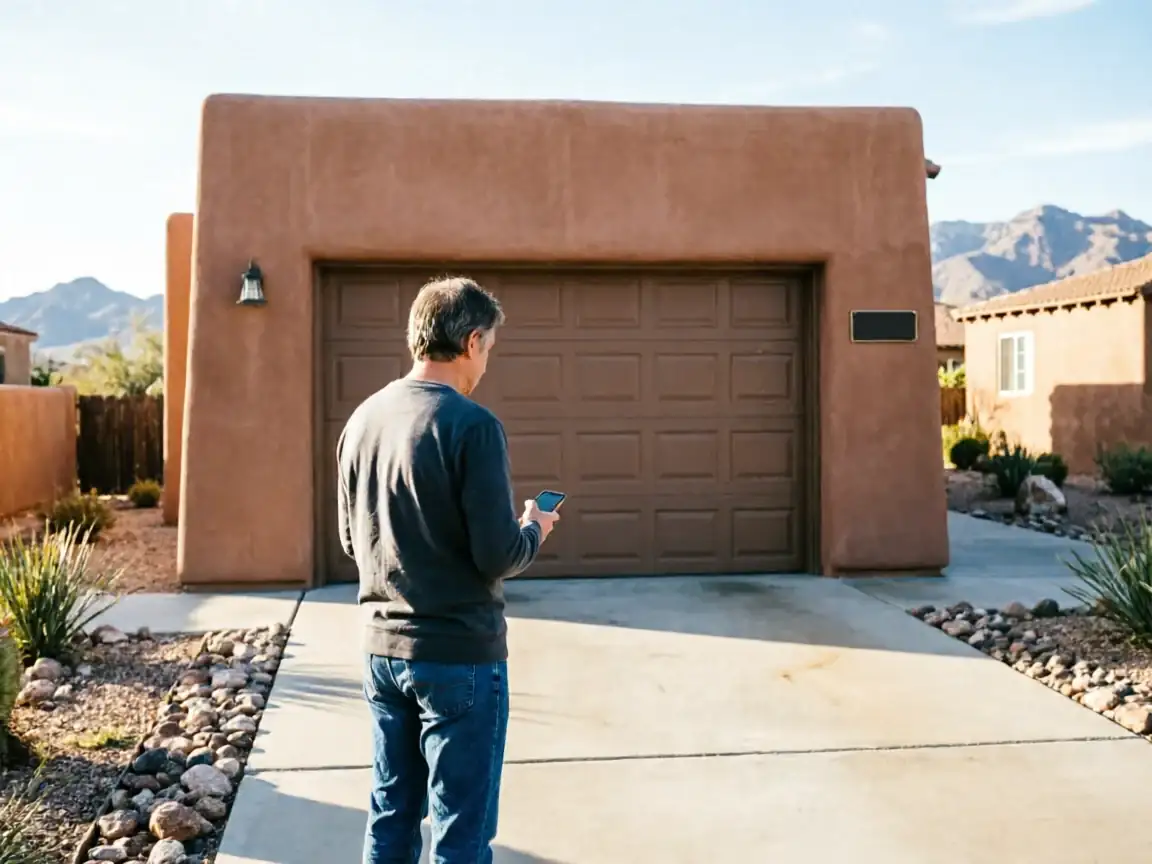
If your door won't open and the opener motor is humming, stop and unplug it before you do anything else
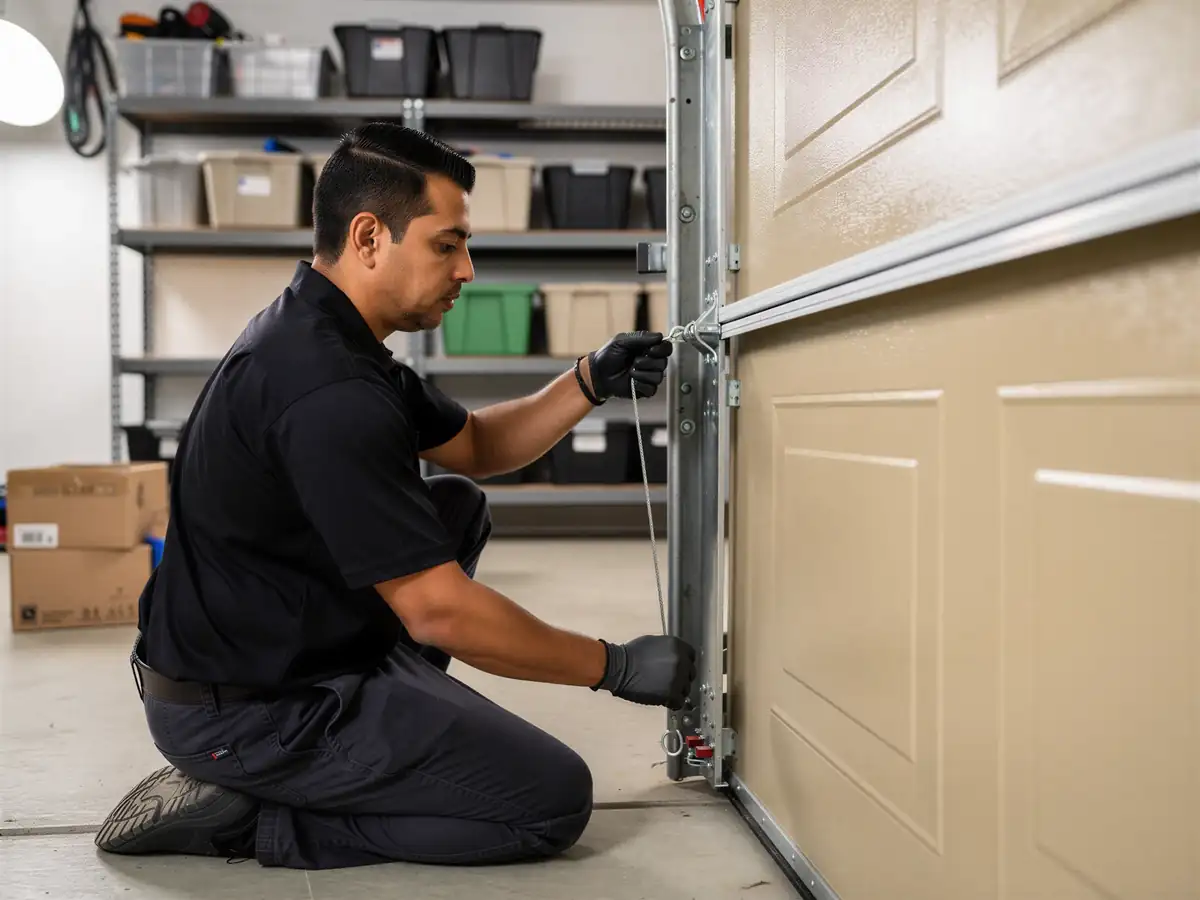
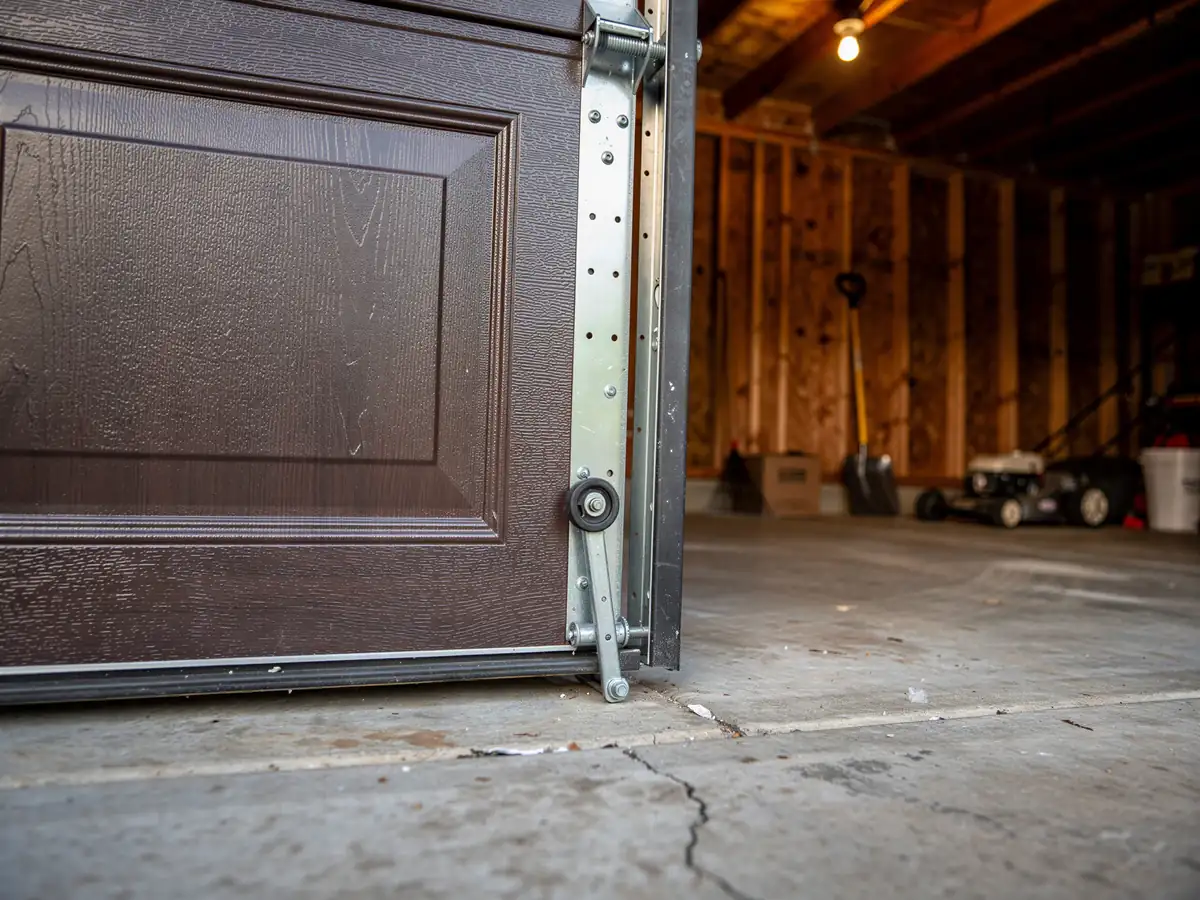
A stuck carriage or a seized gear can burn out a motor that still had years left in it. You can safely check two things yourself: whether the manual disconnect cord is still latched, and whether the tracks have an obvious bend or gap where rollers have jumped out. Both are common on doors that have been running the same hardware since the house was built, somewhere around 1979 for most of Winchester's stock.
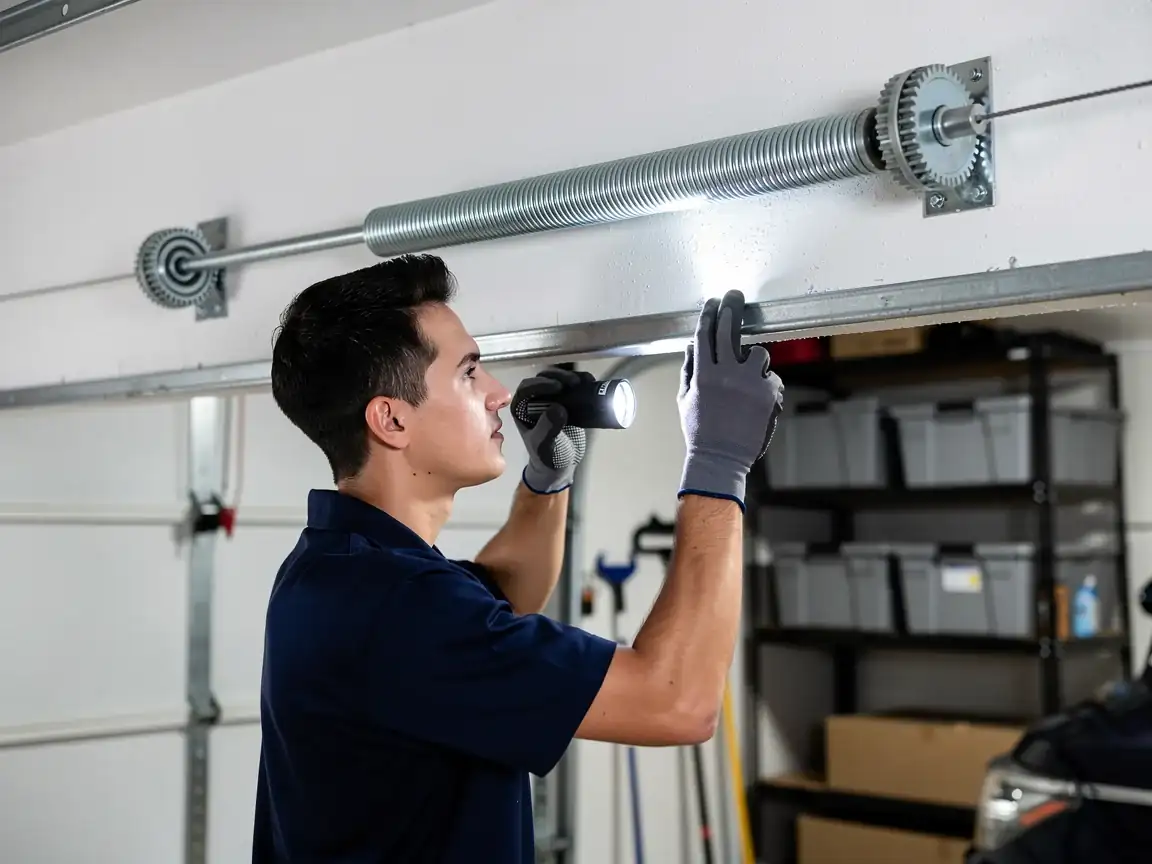
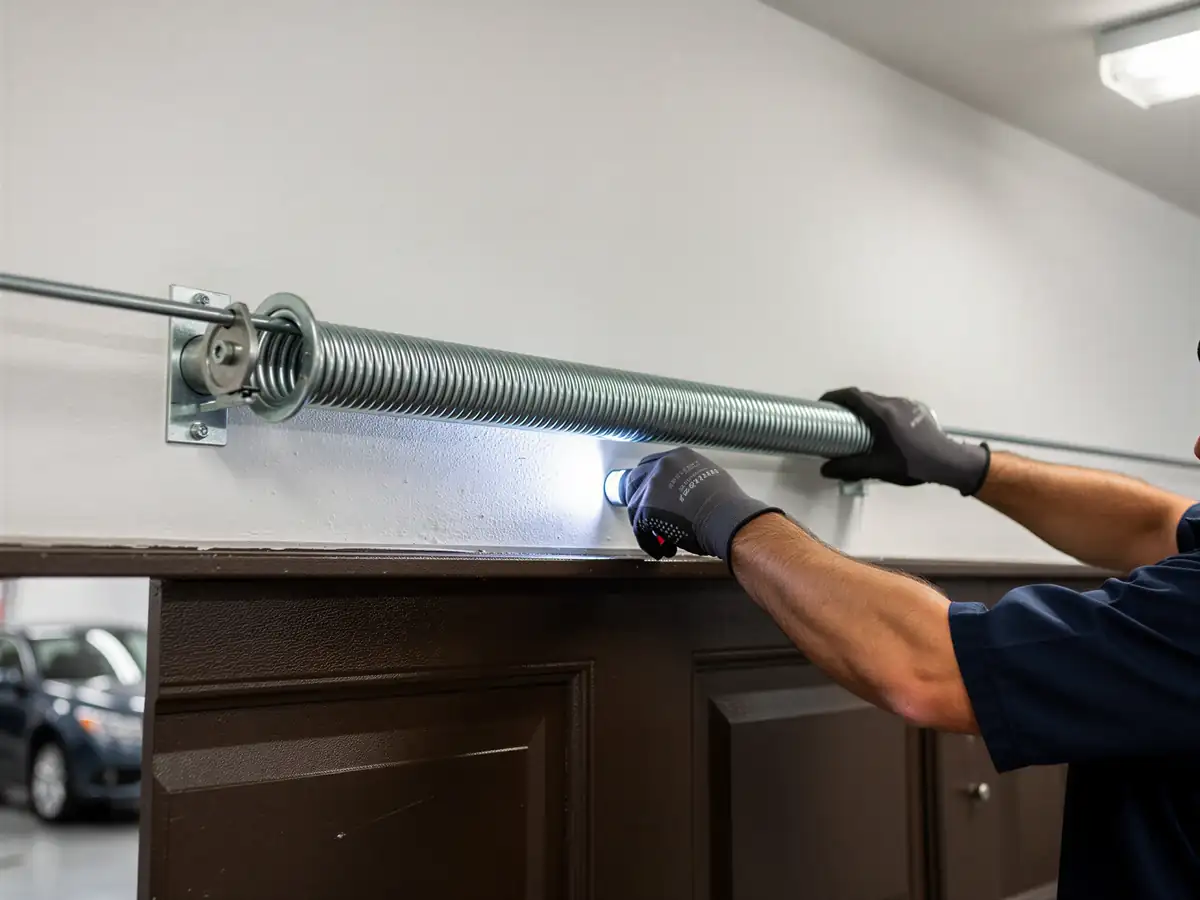
What you should not do is touch a torsion spring
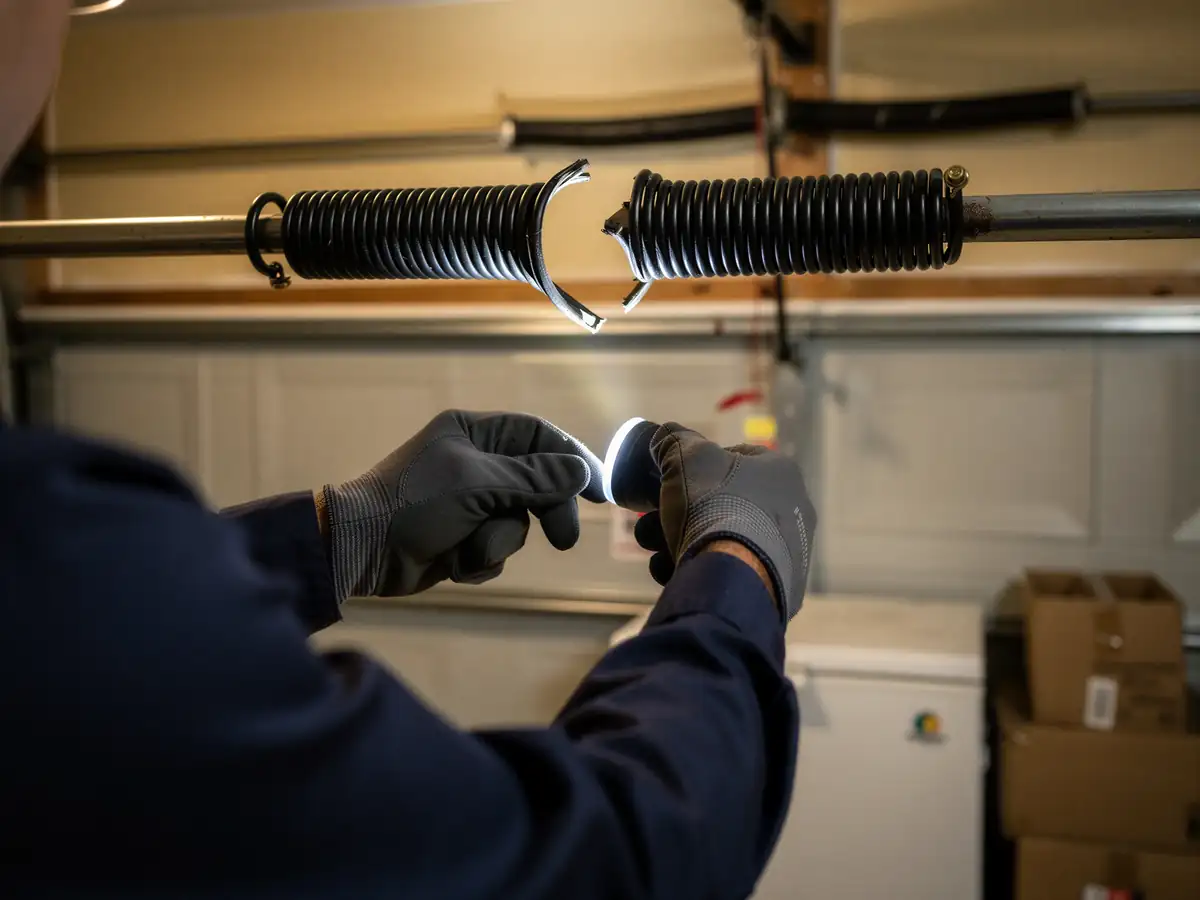
A wound spring on a door this age carries decades of fatigue, and cable or spring failure is one of the few home repair jobs that puts people in the ER. If a cable has snapped or a spring is visibly separated, leave the door down, keep the opener unplugged, and call it in.
Our honest limit here
We travel from North Las Vegas, about 11 miles out, so we're not going to beat a five-minute fix. If your issue really is just a disconnected cord or a sensor knocked out of alignment, you may be able to clear it yourself before we're even on the road.
- 11 miles
What Causes It Around Here
A lot of Winchester went up around 1979, and garage door hardware from that era was built to a lower duty-cycle standard than anything sold today. Torsion springs rated for roughly 10,000 cycles back then are now well past that number in houses that never had the springs swapped, which is why so many of our Winchester calls are a spring that let go without warning rather than one that was squeaking first.
The area's heat load does the rest of the damage. Lubricant on original rollers and hinges cooks off faster under sustained severe heat, bearings dry out, and steel springs lose temper quicker than they would in a milder climate. Put a 1979-build spring through decades of that heat cycle and the failure mode is usually sudden, not gradual - which is why 'it worked fine yesterday' is something we hear a lot out here.
Openers are the other weak point. A chain-drive unit installed when the house was new has long since outlived its gears and has probably been run with a worn drive gear for years before it finally strips. None of this is unique to one house - it's the hardware that came standard in 1979, still doing the job it was never built to do this long.
How to Book
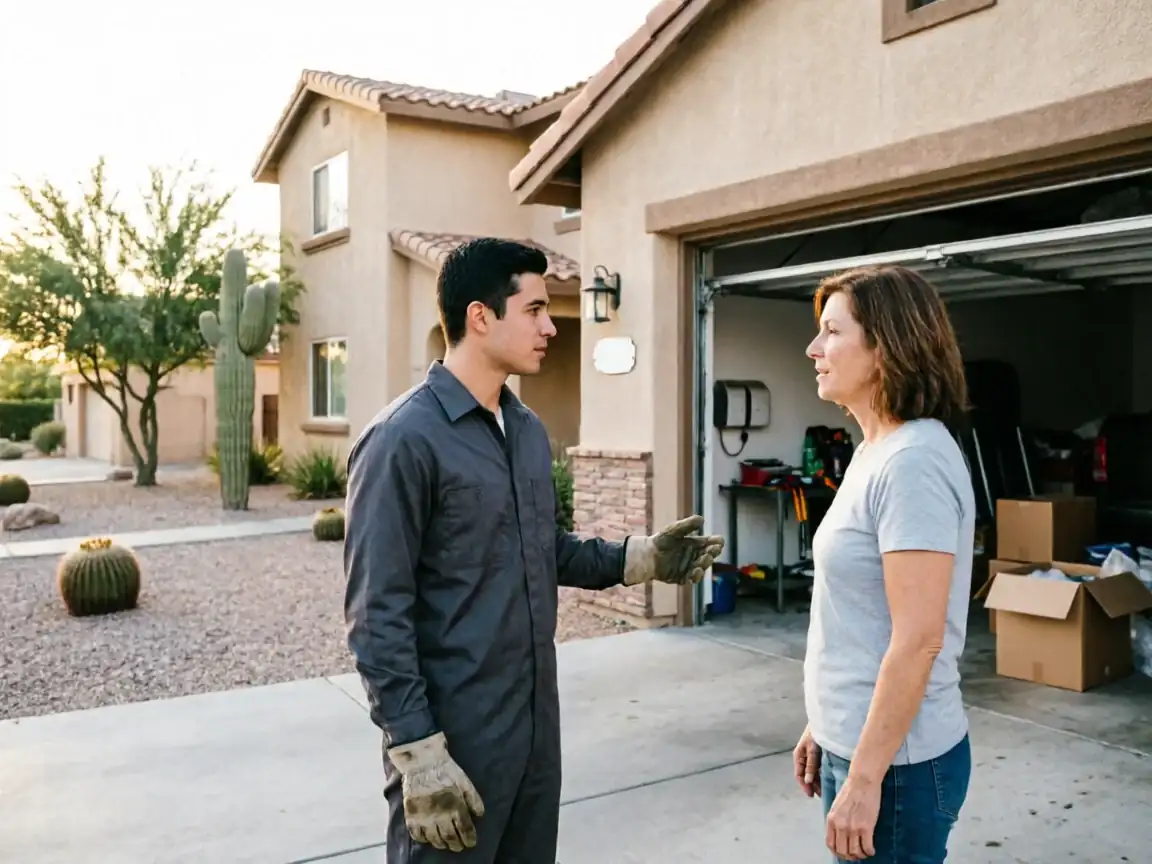
Call it in and tell us what you're seeing - door stuck halfway, spring snapped, opener dead, door off track. We dispatch from North Las Vegas, about 11 miles from Winchester, so give us the cross streets or a gate code if you have one; we don't have a branch here and won't pretend otherwise.
If you're not sure whether what you're dealing with is an emergency or something that can wait a day, say so - a door stuck open overnight is a security problem, a door stuck closed with a car trapped inside is usually not something that can wait. We'll tell you straight which one it sounds like from your description.
For general service and routine work on Winchester doors, not the same-day stuff, see our Winchester garage doors page. For the broader emergency service we run out of North Las Vegas, the emergency repair page covers the full area.
How We Fix It
First thing on site is the spring and cable system
Because that's the most common failure on houses built around 1979 and the most dangerous to leave half-fixed. We match the new spring to the door's actual weight and cycle count rather than just swapping in whatever was there - original-era springs were often undersized by today's standard anyway.
If the opener is the problem, we check whether it's worth repairing at all
A chain-drive unit old enough to have come with the house usually isn't - parts for 1970s and 80s-era openers are hard to source, and a modern belt-drive unit costs less over time than chasing parts for a unit that's going to fail again in a different way next year. We'll tell you when replacement is the better math rather than running up a repair bill on a dying unit.
Track and roller work is more straightforward
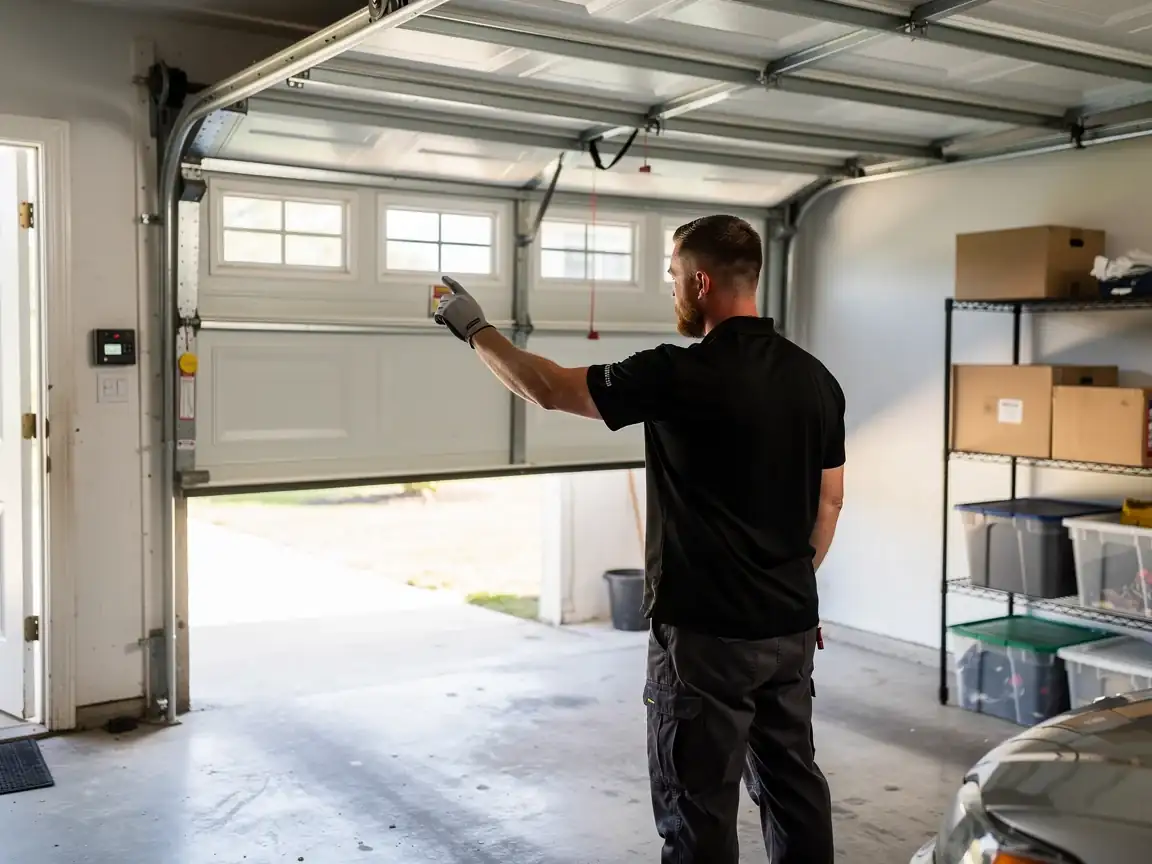
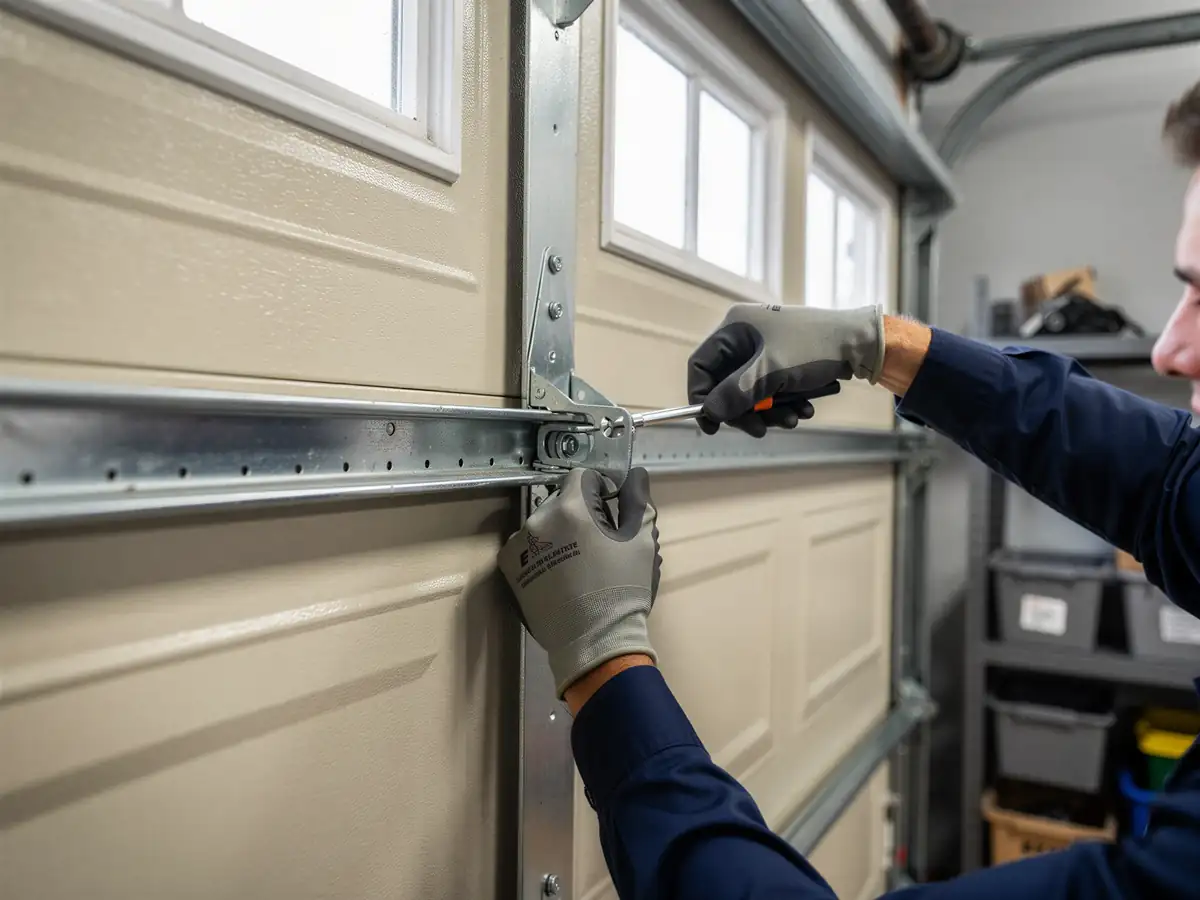
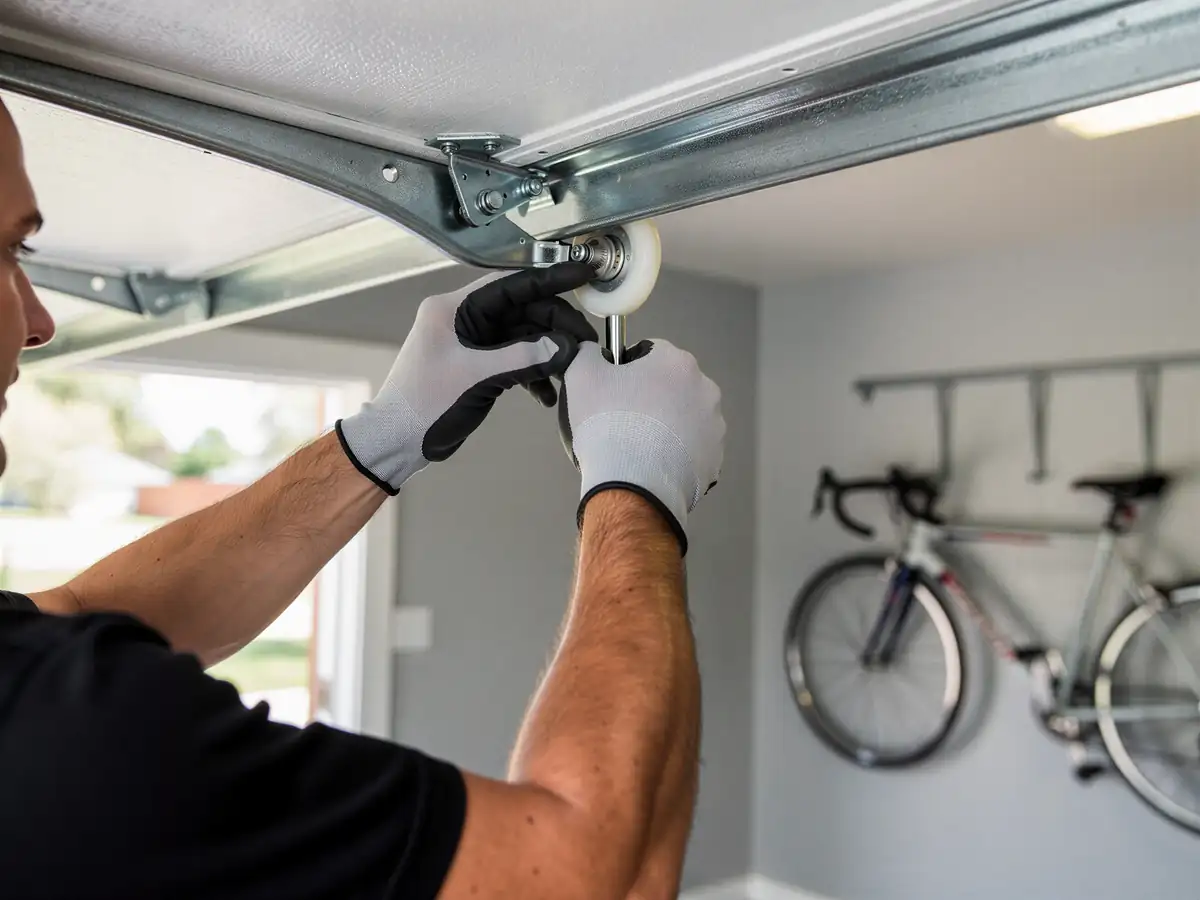
Realign, replace worn rollers, check hinges for metal fatigue. On a door running original hardware from the build year, we usually find more than one thing wrong at once, since everything's aged on the same clock.
Stocked Parts
Because so much of Winchester's door hardware traces back to a 1979 median build year, we carry torsion springs sized for the door weights and track lengths common to that generation, plus the cables, drums, and rollers that wear alongside them. We also stock sensor pairs and standard belt-drive opener units, since a dead chain-drive opener from that era is rarely worth repairing piece by piece.
What we don't carry on the truck is obsolete, single-source parts - a proprietary opener logic board from a defunct manufacturer, for instance, has to be special-ordered and that can mean a delay measured in days, not hours. We'll tell you up front if your job needs a part like that instead of promising a same-visit fix we can't deliver.
For the heat this area sees, we also stock higher-temperature-rated lubricant and weatherstripping, since standard-grade versions break down faster here than they would somewhere milder.