Doing It Yourself
Most garages in Winchester went up around 1979
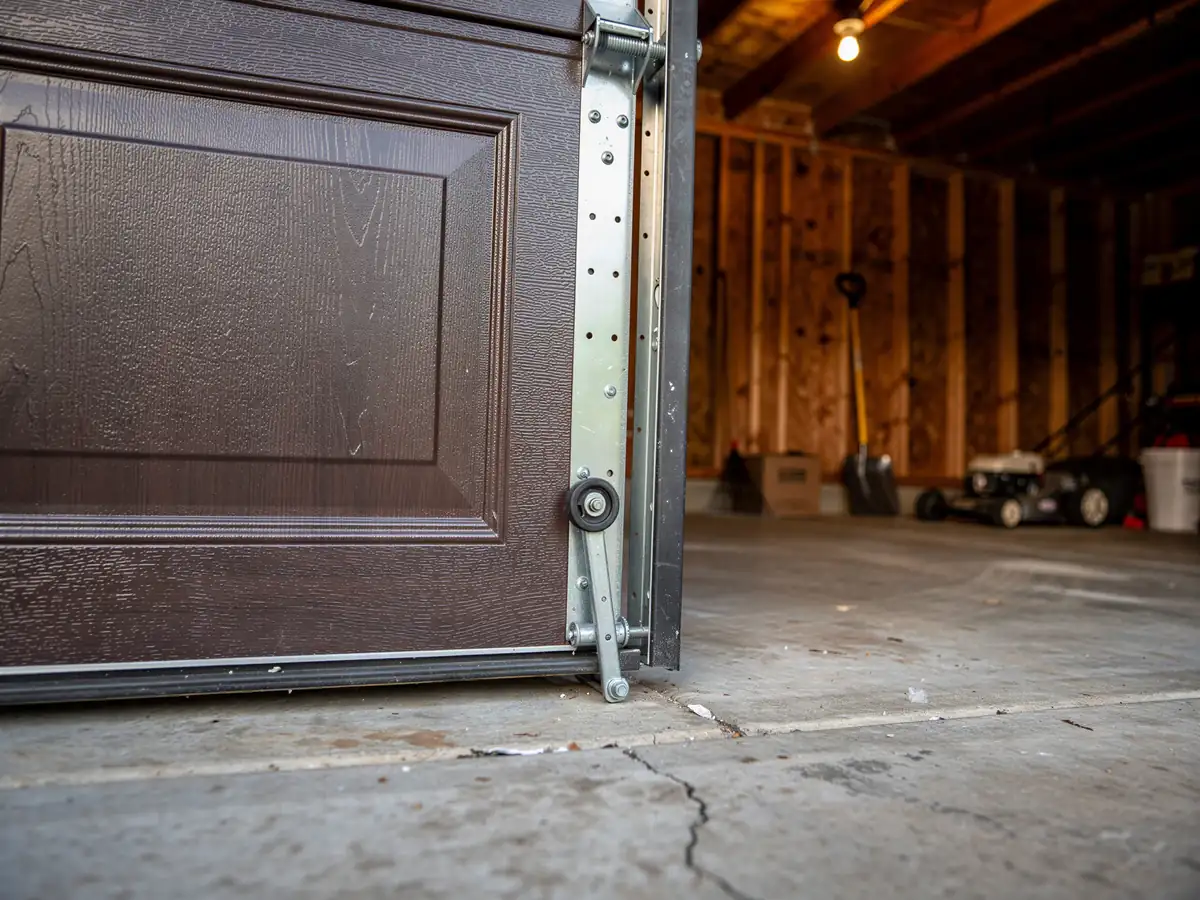
And the doors that came with those houses used plain steel or nylon rollers on standard steel track - nothing sealed, nothing self-lubricating. If your door is original or close to it, the rollers are probably the stock parts from that build, and after four decades of summer heat they're brittle, flat-spotted, or just gone round at the edges.
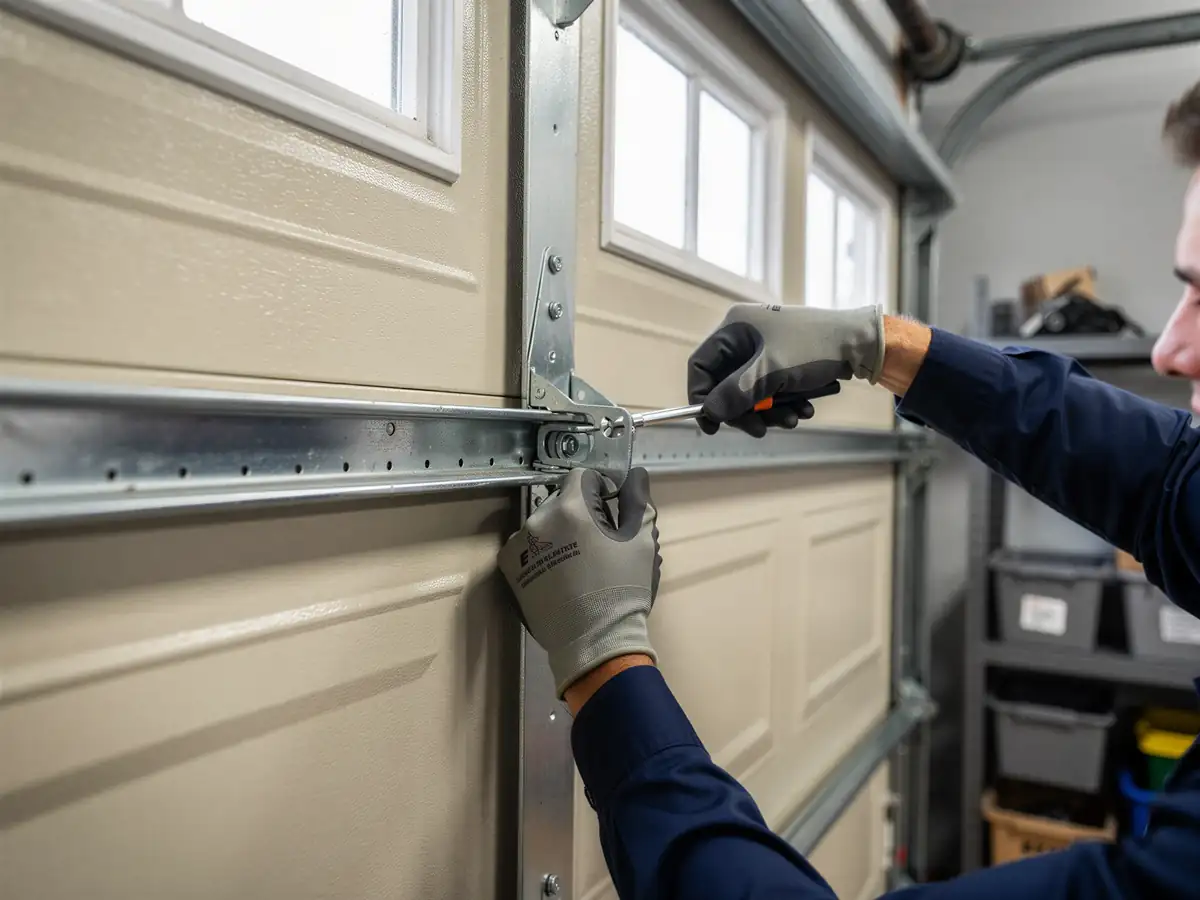
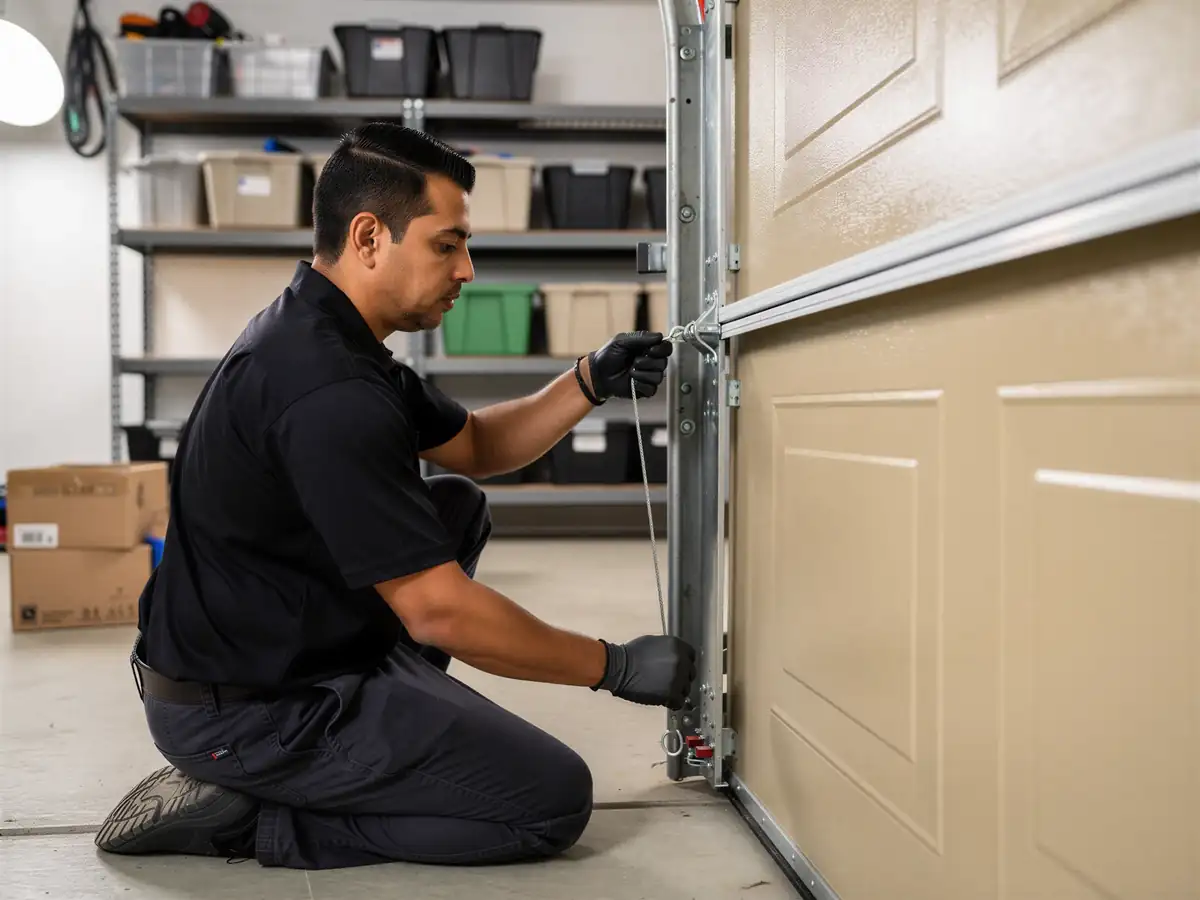
You can swap a single roller yourself if the door is down, the spring is intact, and you're not working near the bottom bracket under tension
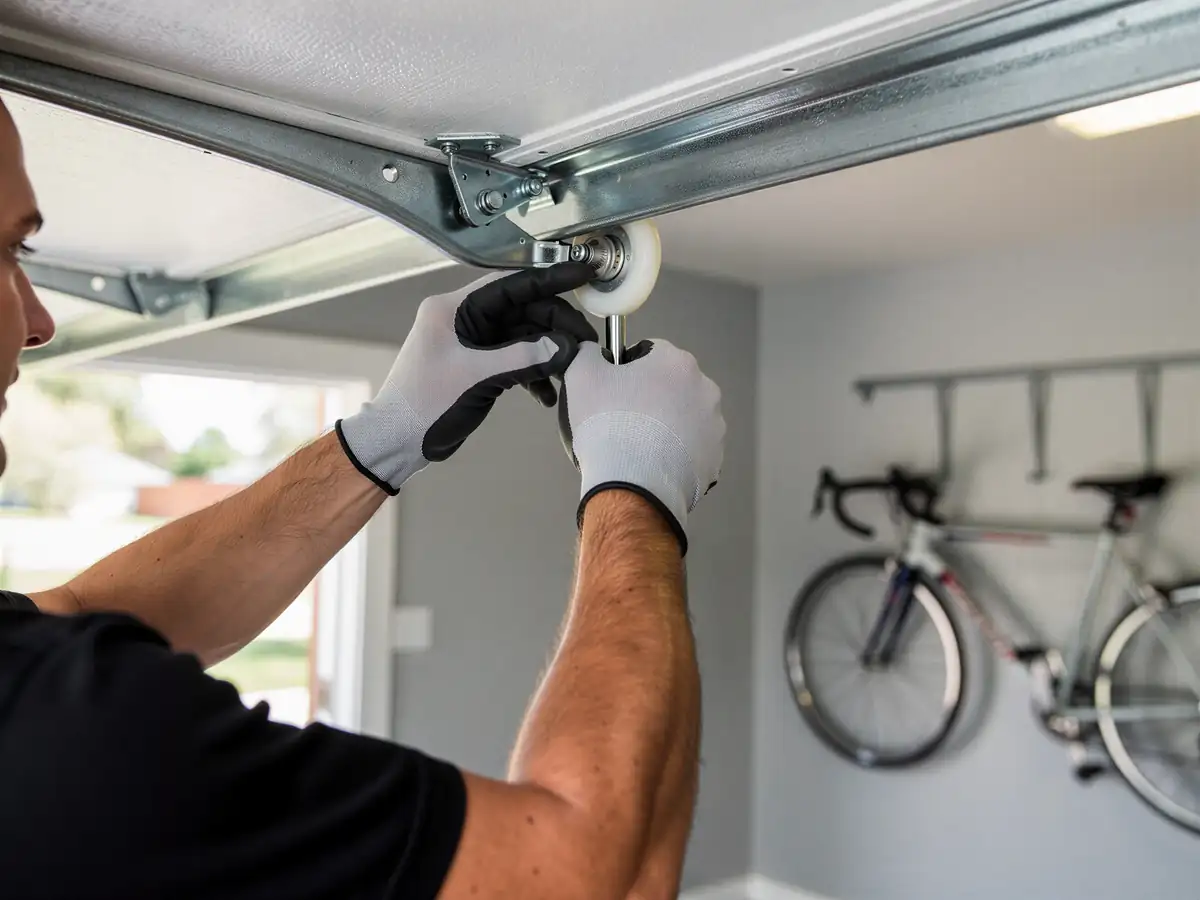
That one can take a finger off. Loosen the hinge, slide the old roller out of the track, slide the new one in, re-seat the hinge. Ten minutes a roller if nothing's rusted solid.
Where it stops being a DIY job
If more than two or three rollers on one side are bad, if the track itself is bent or pitted from the old roller grinding against it, or if you're not sure whether what's failing is the roller or the bearing at the hinge. On a 1979-era door, track replacement often comes bundled with roller work because the two wear together. That's the point where calling in a tech from North Las Vegas costs you less than a wasted Saturday and a bent track.
What Causes It Around Here
Winchester sits in a severe-heat climate band, and that's the main thing working against rollers here. Nylon rollers soften and deform when garage temperatures climb through the afternoon, especially in attached garages with doors facing full sun. Steel rollers don't soften, but on original 1979-era hardware they usually ran without sealed bearings, so grit and dust work into the roller stem over the years and the roller starts grinding instead of rolling.
The other factor is just the age of the housing stock. A door built in 1979 has had roughly 45 summers of expansion and contraction on steel track, and every cycle of heat pushes a little more wear into whatever roller is riding that track. Houses in Winchester built in that era rarely had their rollers swapped out on any schedule - rollers aren't something most owners think about until the door starts grinding or jumping the track on the way down.
We see the same pattern across the areas we cover near here: the older the door, the more the roller failure shows up as noise first, then a door that hesitates or jumps track on one side before it fails outright.
How to Book
We're based in North Las Vegas, about 11 miles from Winchester, so we schedule the trip rather than dispatch from a local yard. Call and describe what the door's doing - grinding, jumping track, one side dragging - and we'll tell you whether it sounds like a roller job or something bigger, like a bent track or a bad bearing at the shaft.
We don't keep a branch in Winchester and we're not going to pretend we do. What we can tell you is the drive isn't long, and a roller swap doesn't usually need more than one visit once we've seen the door and matched the roller type to your track.
If you're not sure what's wrong, a phone description is enough for us to bring the right rollers the first time - steel ball-bearing, nylon, or the sealed type - rather than making you wait on a second trip because we guessed wrong from 11 miles away.
How We Fix It
We start by checking whether the issue is actually the roller or something it's hiding
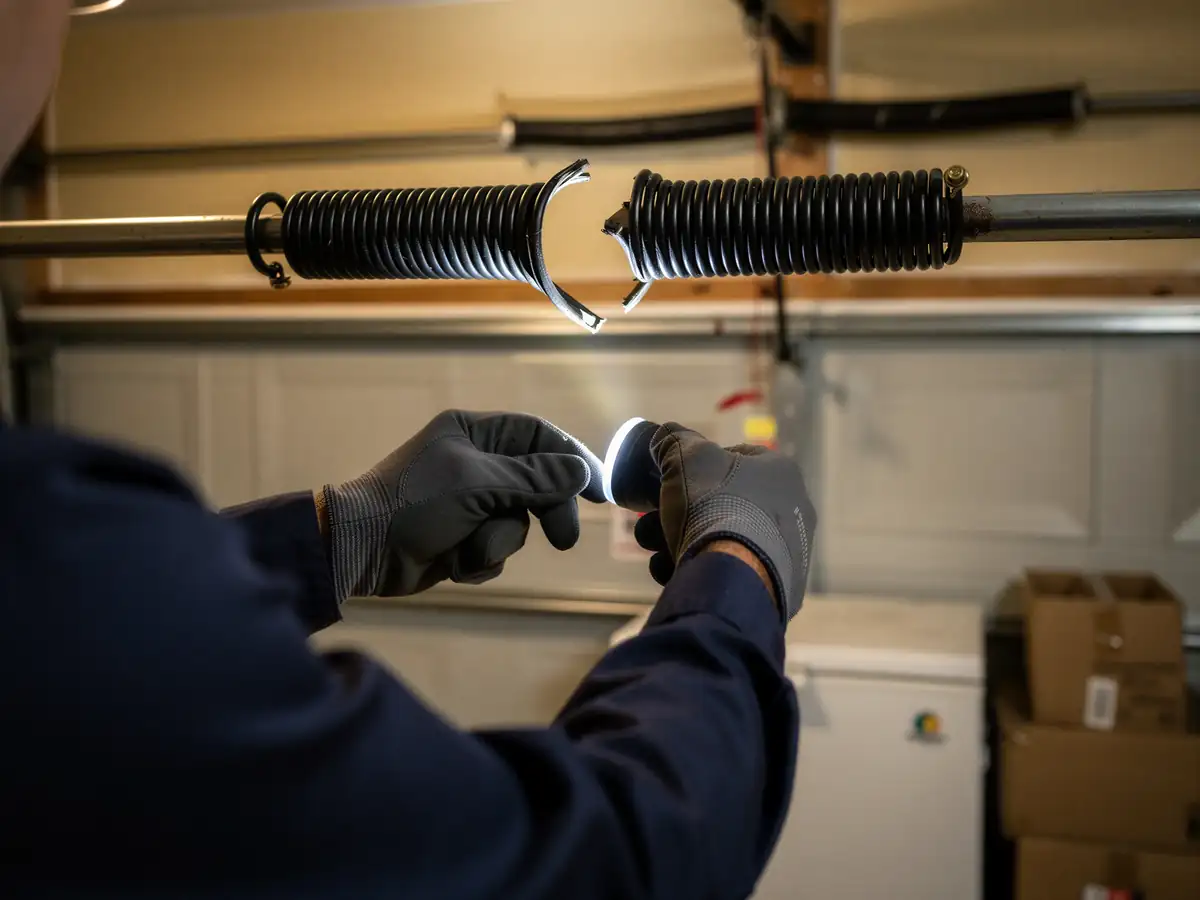
A bent track, a loose hinge, or a bottom bracket that's walked loose over the years. On a door from the 1979 era, we also check the track gauge, since track from that period sometimes runs narrower than what's sold off the shelf now, and a mismatched roller will grind even if it's new.
For a straight roller swap, we remove the door's full roller set rather than just the one that's audibly bad
If one roller on a side has worn out from heat and grit, the others on that same track have usually logged the same miles and are close behind. Replacing the set costs little more than replacing one and saves you a second call in a year.
If the track is bent from years of a dragging roller
We straighten or replace that section before setting the new rollers in, because a new roller on a bad track just wears out again fast. We balance and test the door under power before we leave, listening for the grind that brought you to call in the first place.
Stocked Parts
Winchester's median household income runs around $49,190, lower than the roughly $61,177 median across our wider service area, and that's part of why we stock a range of roller grades rather than pushing the priciest sealed-bearing part on every job. For most 1979-era doors, a standard galvanized steel roller with a sealed bearing holds up fine in our heat and costs less than the nylon equivalent.
We carry 7-ball and 10-ball bearing steel rollers, sealed-bearing steel rollers, and nylon rollers in the stem lengths that fit older track gauges, not just current-production sizing. That matters on a door this age - a roller that's a half-inch off in stem length either binds in the hinge or rattles loose inside a year.
One limit worth being honest about: if your track itself is a discontinued profile from the original builder, we may need to order a matching section rather than having it on the truck, and that can add a few days to a track-and-roller job. Straight roller swaps on standard track, we complete same visit.