How to Book
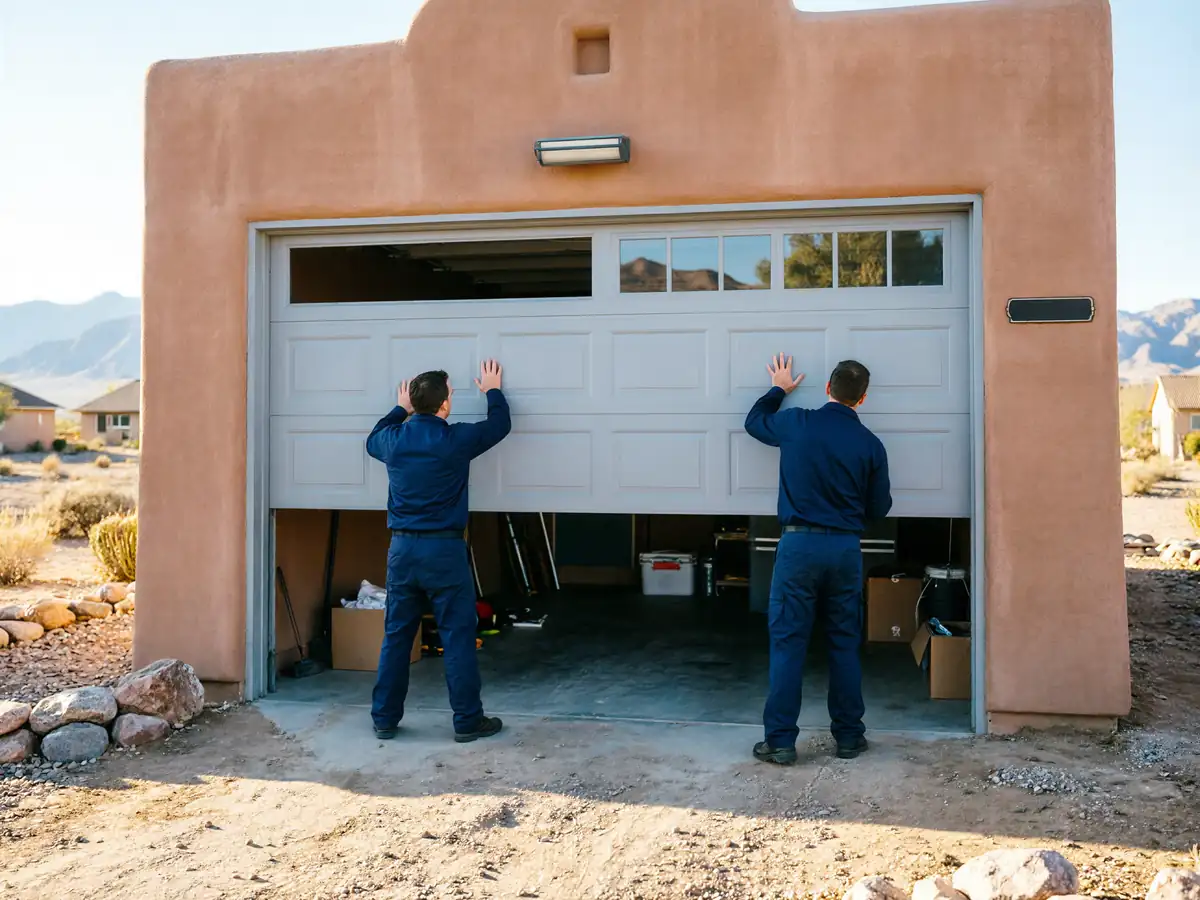
Call and describe what you're seeing - which side the door jumped off, whether it's stuck halfway, whether you hear grinding when the opener tries to run it. That tells us whether to bring spare track sections or just tools, which matters because we're driving in from North Las Vegas rather than keeping a stock van parked in Sunrise Manor. Have the house built-year handy if you know it; on a street where most doors date to the early '90s, knowing that narrows down the hardware before anyone opens the garage. We don't quote a repair over the phone without seeing the track - a hairline bend looks fine from across the garage and isn't.
What Causes It Around Here
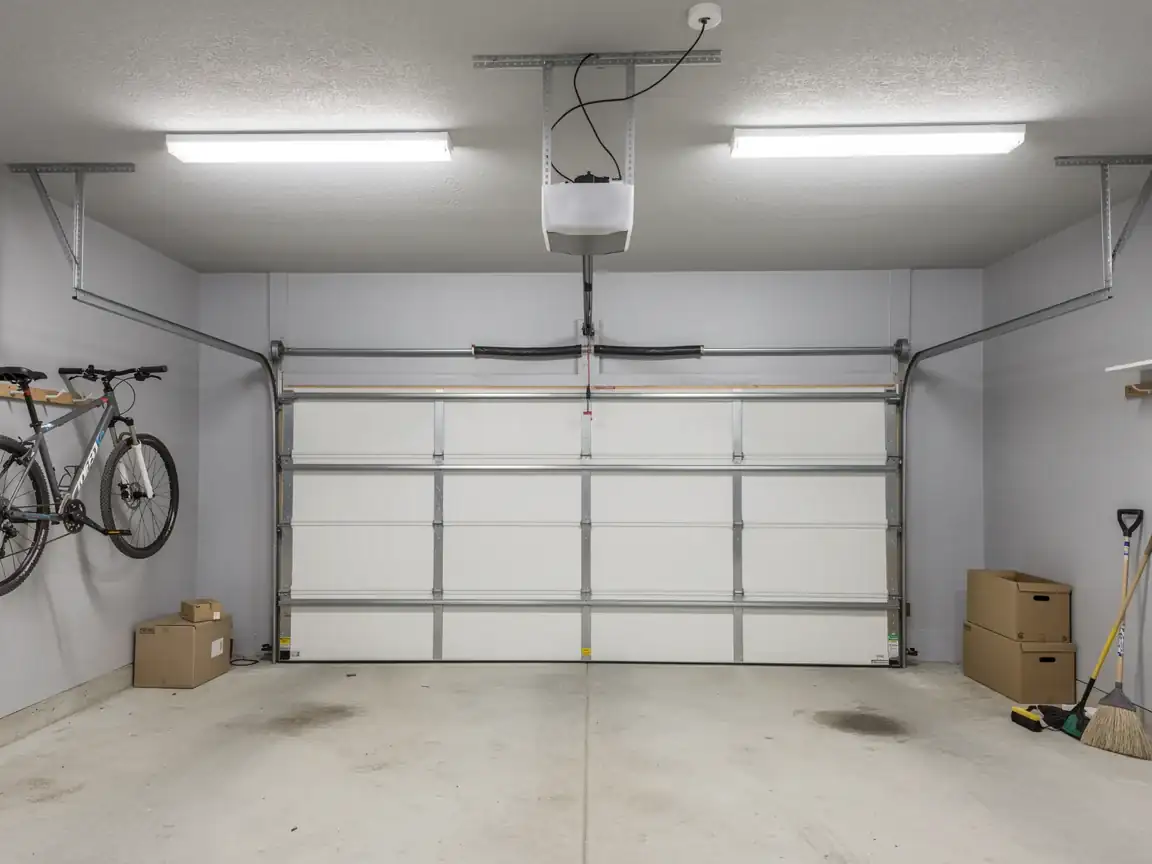
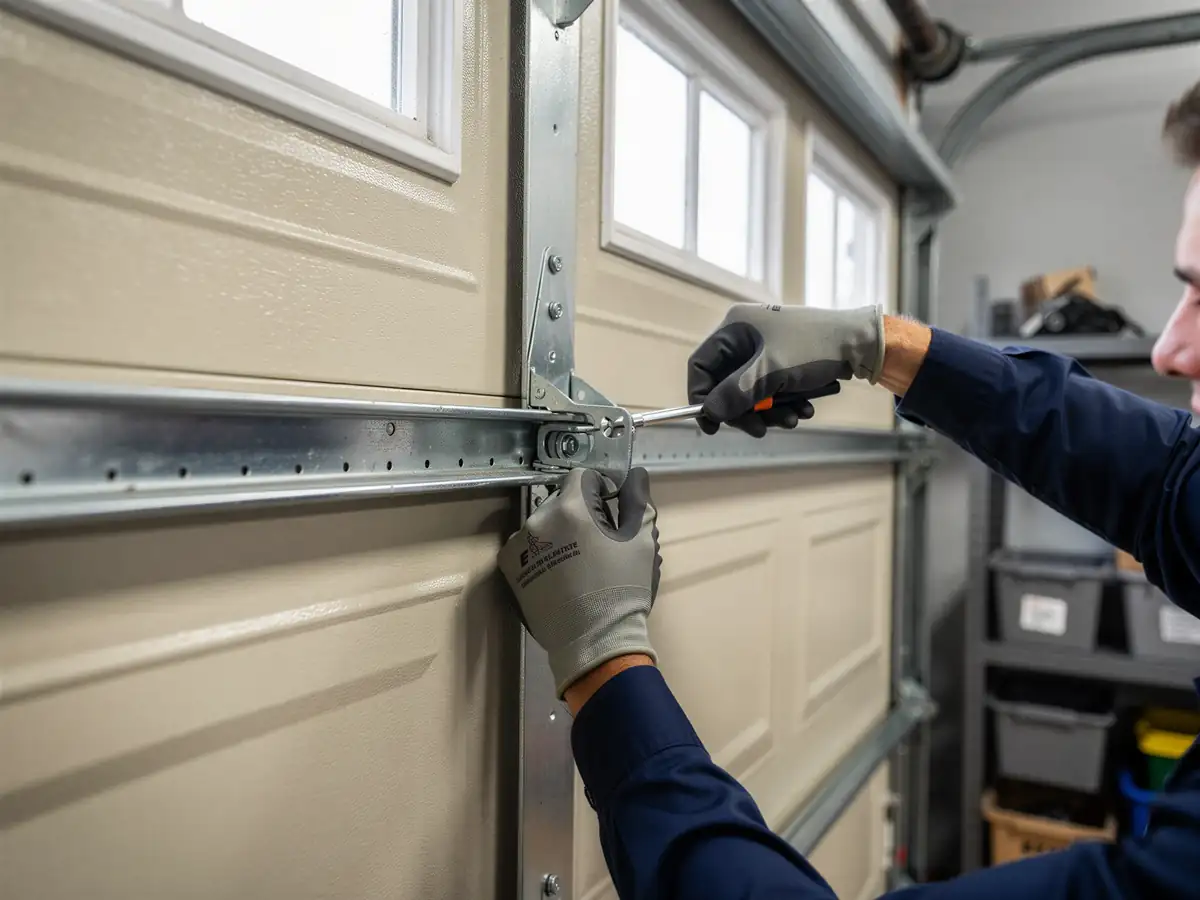
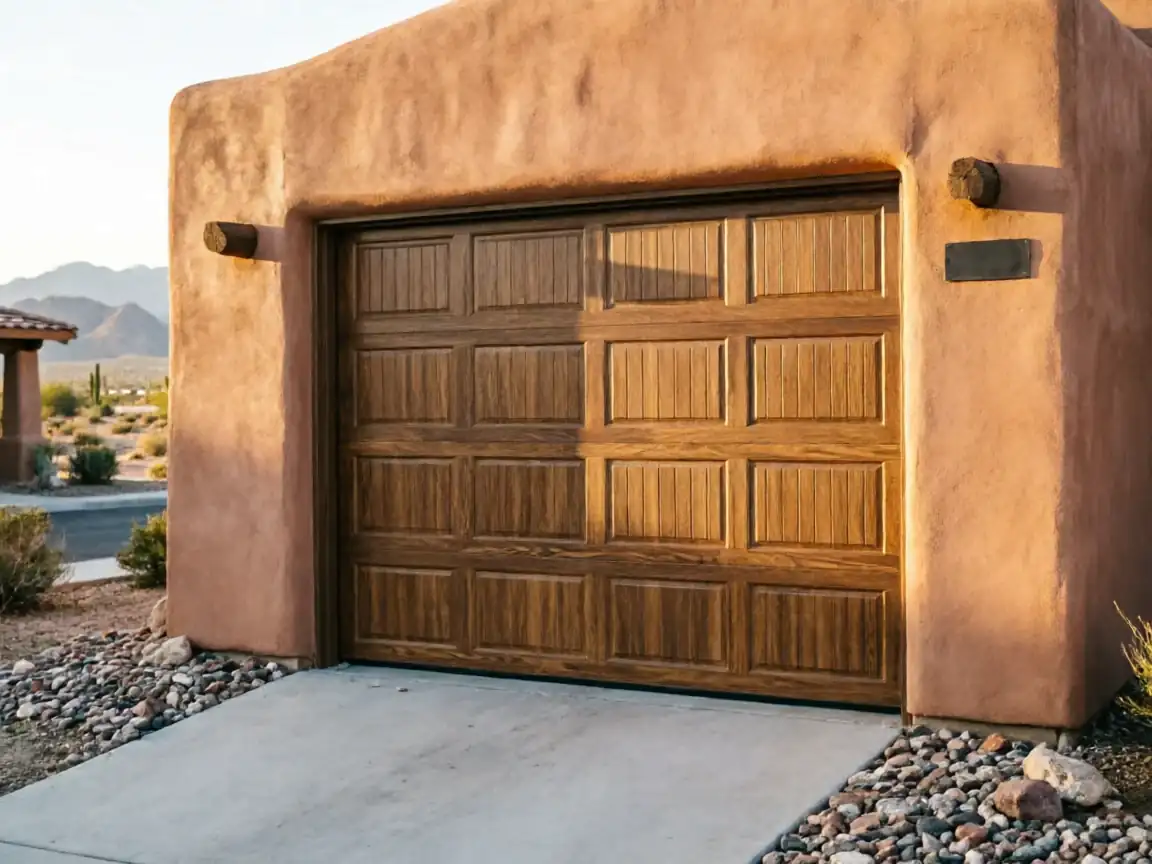
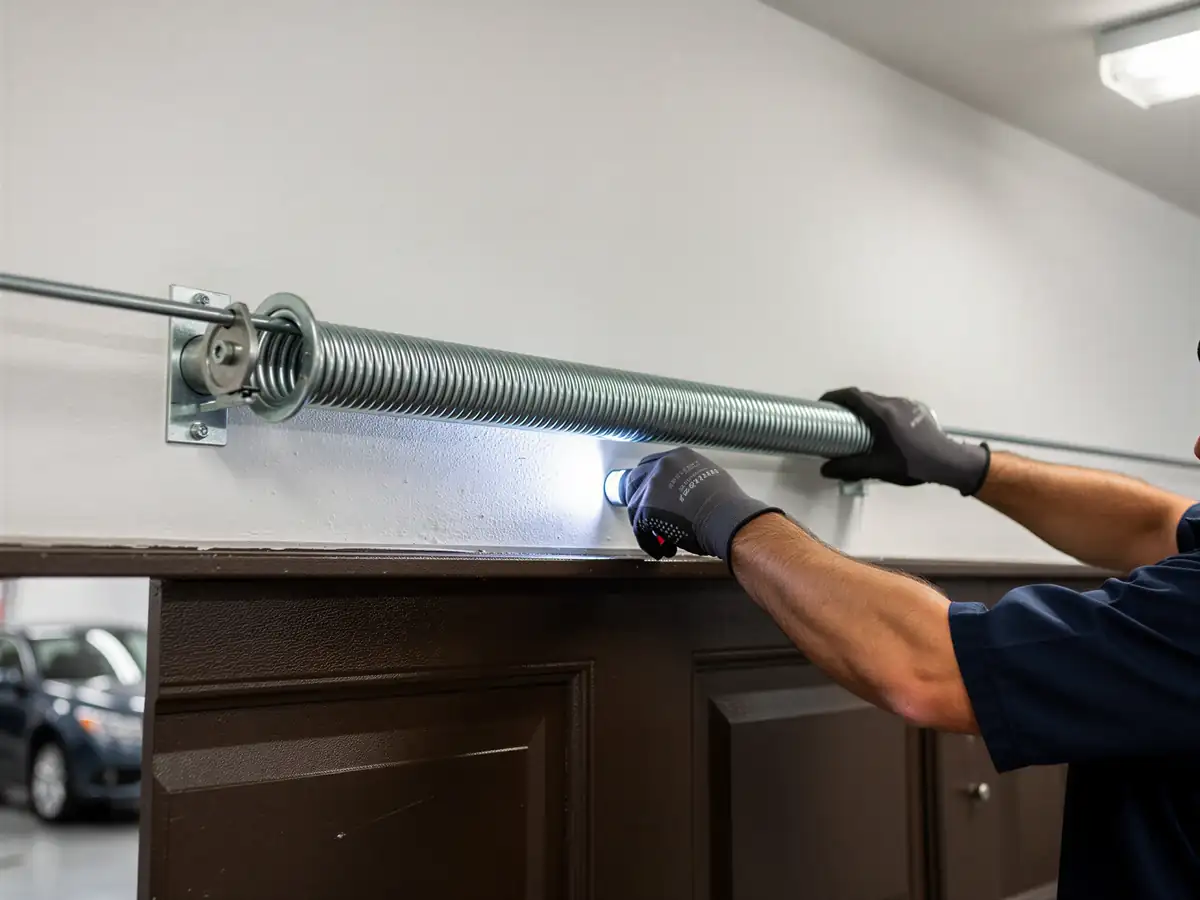
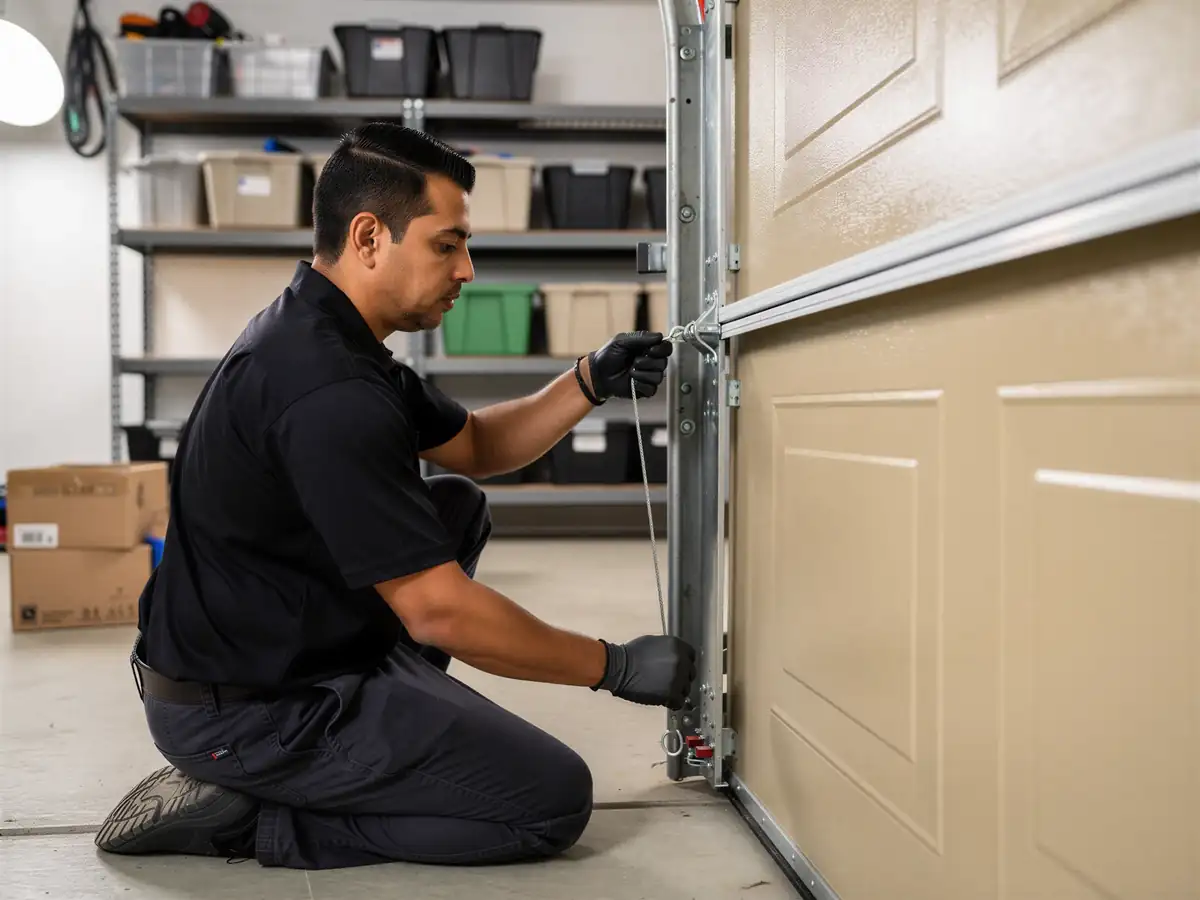
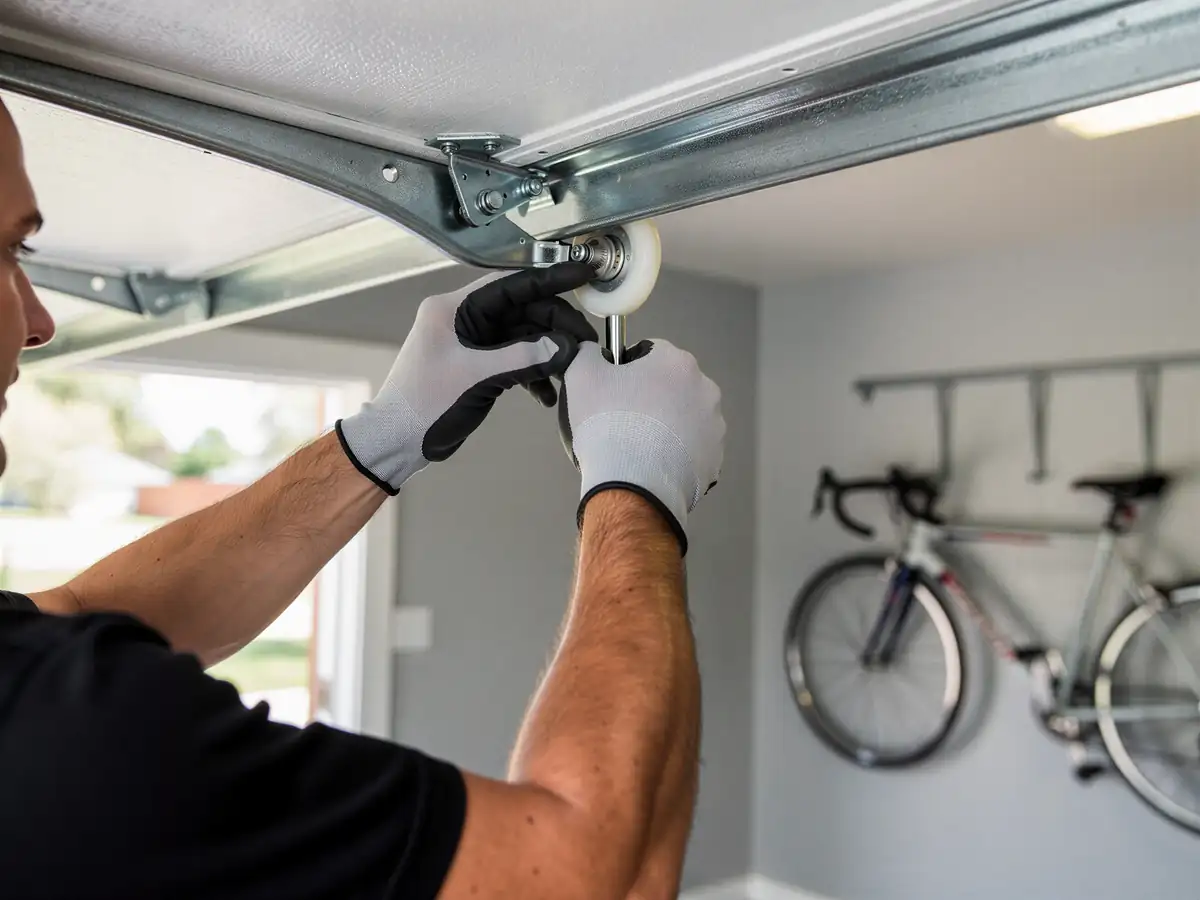
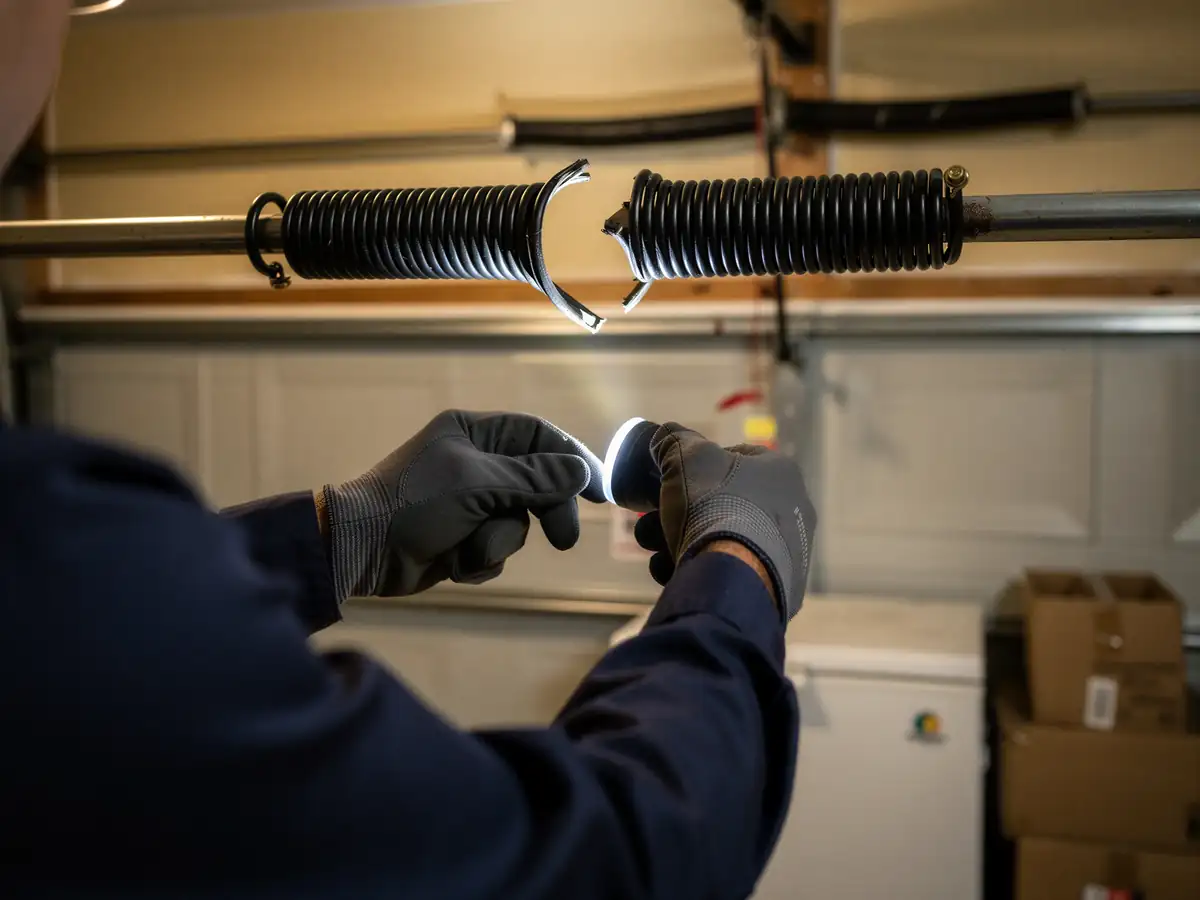
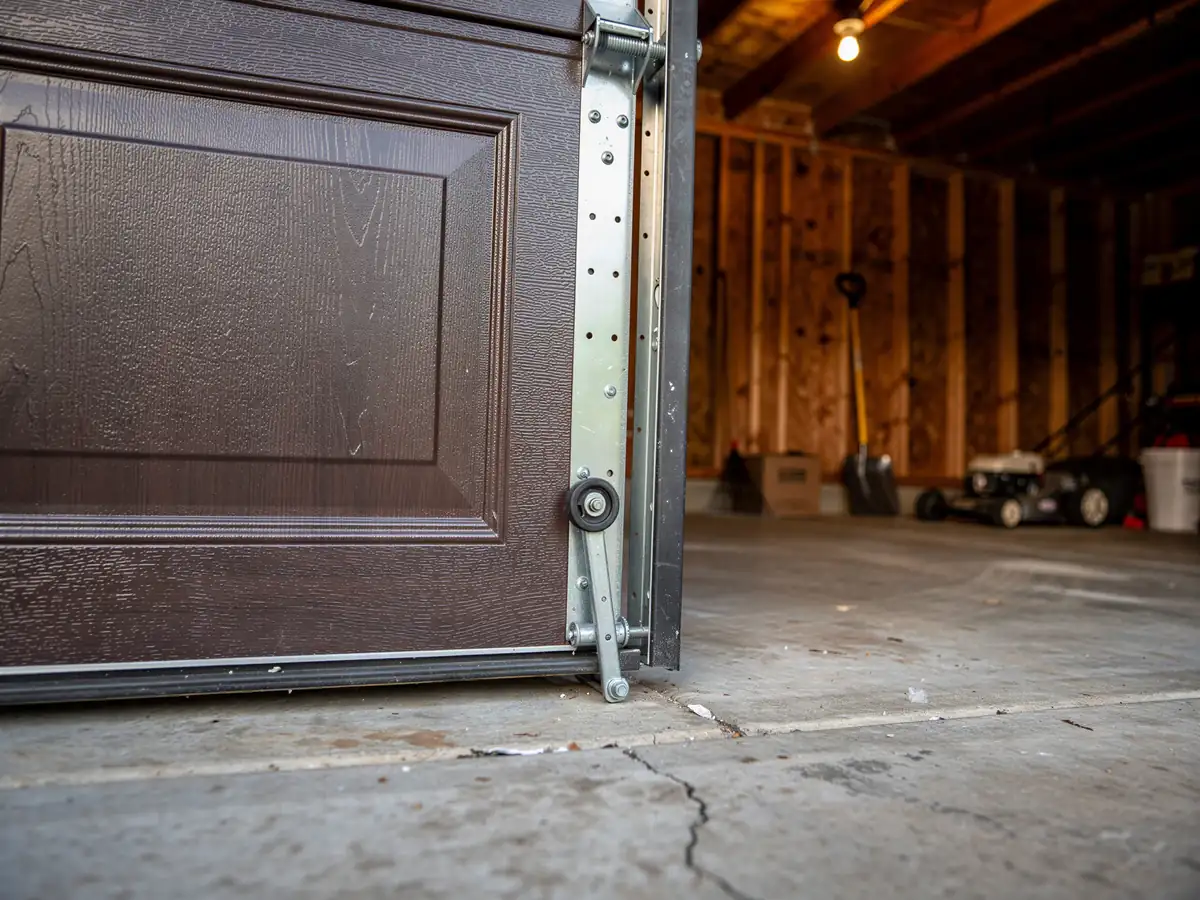
This area sits in a severe-heat climate band, and that's the main driver of off-track failures on housing stock from this era. Galvanized track expands under direct summer sun, especially on south- and west-facing garages that get full afternoon exposure, and repeated expansion loosens the lag screws holding the track to the jamb. Once a bracket works loose, the door rides crooked on the next cycle and a roller jumps the rail. On 1991-era doors specifically, the rollers themselves are often the original stamped steel, which wear a groove into the track over decades of heat-cycling - that groove is what lets the roller pop free instead of riding smooth. A second common cause here is a broken off-center cable on a door that still has the older extension-spring setup instead of torsion; when that cable snaps, the door drops unevenly and pulls itself off the track on one side.
Doing It Yourself
Don't force it back into the track by hand with the opener engaged. On these older setups the spring tension doesn't disengage just because the door's off-track, and a door that drops while you're working under it can do real damage. Disconnect the opener, prop the door if it's stuck open, and leave the spring and cable work to someone who does it daily - we're honest that bent track on a thirty-year-old door sometimes isn't worth repairing section by section. If the track itself is badly warped rather than just loose, replacing that run of track costs less in the long run than patching bent rail that'll jump again next summer.